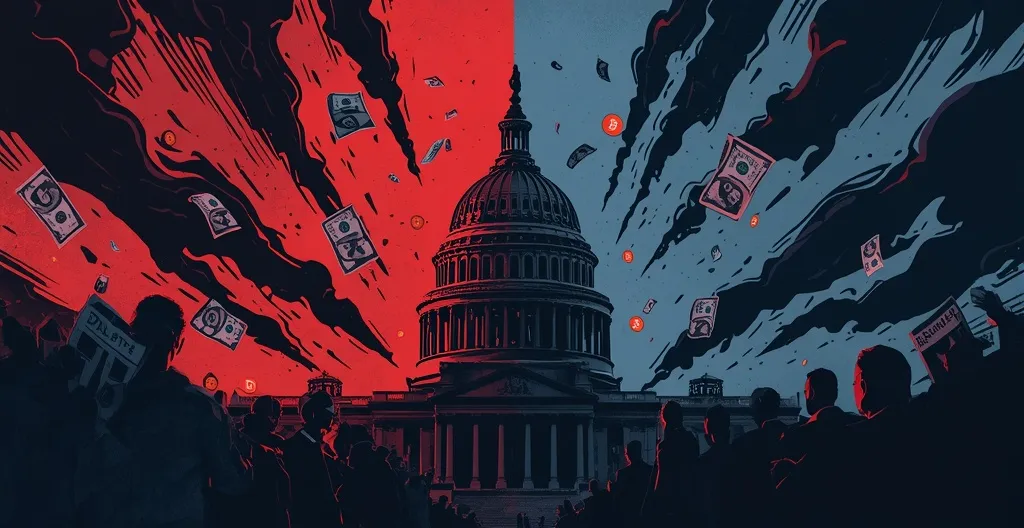
A claim that Defend American Jobs PAC spent $11.4 million in Ohio’s Senate race tied to a Bitcoin (BTC) policy fight is making the rounds, but the supporting material provided here does not verify it. That matters, because in crypto politics, a huge number without receipts is just campaign noise with better makeup.
- $11.4M is the claimed PAC spend
- Defend American Jobs PAC is named in the claim
- Ohio Senate is the race in question
- Bitcoin policy is framed as the issue
- No supporting evidence was provided with the claim
What can be said with confidence is limited: a PAC is a Political Action Committee, meaning an organization that raises and spends money to influence elections or policy. If a PAC really poured $11.4 million into a Senate contest, that would be a major expenditure. It would likely mean ads, mailers, digital spots, opposition messaging, or some mix of all three.
What cannot be confirmed from the material at hand is the rest of the story. There is no verified filing, no named outlet, no date, no candidate, and no policy details showing what the money supported or opposed. The headline-sized claim may turn out to be accurate, but right now it sits in the uncomfortable zone between possible and proven.
That distinction matters. Political money gets exaggerated all the time, especially when crypto is involved. It is easy to slap Bitcoin onto a headline and make the whole thing sound like the future of finance is colliding with the machinery of U.S. elections. Sometimes that is true. Sometimes it is just a shiny wrapper around ordinary campaign spending.
If the spending claim is real, the bigger picture is worth noting. Bitcoin policy has become a legitimate political issue because it touches on regulation, mining, energy use, self-custody, taxation, financial surveillance, and the broader question of whether the U.S. wants to encourage open monetary networks or keep treating them like a nuisance to be contained.
That is not a small fight. Bitcoin is not a company with a lobbyist in every hallway. It is a decentralized protocol, which makes it harder to box into neat campaign talking points. Supporters frame it as financial freedom, censorship resistance, and a check on monetary overreach. Critics focus on volatility, speculative excess, illicit use, and energy concerns. Both sides usually skip the nuance when there is a microphone nearby.
But the real issue here is not whether Bitcoin policy matters. It does. The issue is that this specific $11.4 million claim is unconfirmed from the material provided. Without campaign finance records or credible election reporting, it should be treated as unproven, not as settled fact.
That is the unglamorous truth of political crypto coverage: the money may be real, the influence may be real, and the stakes may be real, but none of that excuses skipping verification. In elections, especially when digital assets are involved, there is plenty of performative outrage and not nearly enough boring paperwork. And boring paperwork is where the truth usually lives.
There is also a broader lesson for readers. Crypto is increasingly part of the political process, whether politicians like it or not. That brings a few benefits: more attention on financial privacy, more resistance to overreach, and more pressure on lawmakers to understand technology before regulating it. It also brings risks: agenda-driven spending, misleading ads, and policy debates reduced to slogans that fit neatly into a 30-second spot. As one recent Washington knife fight showed, Bitcoin policy battle coverage can get messy fast when accusations outrun evidence.
So the honest takeaway is simple. The claim points to a potentially significant political battle over Bitcoin policy in Ohio, but the evidence needed to confirm it is missing here. Until that changes, the smartest position is skepticism with an open mind. And yes, that includes keeping an eye on how the Ohio Senate race could shape broader crypto regulation fights beyond state lines.
Key takeaways
-
Did Defend American Jobs PAC really spend $11.4 million?
That is not confirmed by the material provided. Without campaign finance filings or credible reporting, the number should be treated as unverified. -
Why would Bitcoin policy matter in an Ohio Senate race?
Bitcoin policy can affect regulation, mining, self-custody, taxation, and financial privacy. Those are real political issues, not niche internet chatter. -
What is a PAC?
A PAC, or Political Action Committee, raises and spends money to influence elections or policy, often through ads and advocacy. -
Why should crypto readers care?
Because election spending can shape the rules Bitcoin and other networks operate under. If the political debate is built on weak claims, users and builders end up paying for the confusion.
For readers trying to separate signal from noise, it is worth watching how bipartisan crypto legislation may move under the next administration, because policy direction often matters more than campaign theater. And if you want the bigger picture on how crypto insiders are already shaping Washington, the playbook is increasingly visible in Trump’s PCAST dynamics, where industry voices are getting a seat at the table whether the establishment likes it or not.
One more thing: when crypto money enters political warfare, the public usually hears about ads and outrage, not the actual mechanics of campaign finance. That is why facts matter, and why a look at Crypto super PAC to spend millions to stop former efforts can be useful context. It is the same game, just with a different jersey and a lot more heat.
And because energy politics keeps getting dragged into every Bitcoin discussion like an uninvited cousin at Thanksgiving, the debate often circles back to Understanding the Impact of Climate Change on Global policy arguments, especially when critics try to fold mining into broader environmental narratives without doing the homework. Sometimes that criticism is legitimate. Sometimes it is just ideological laziness wearing a green hat.