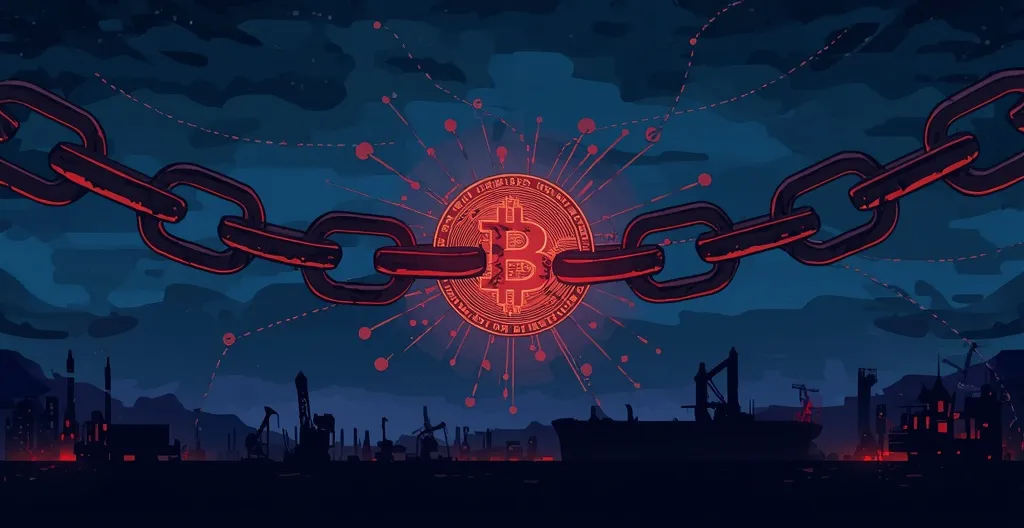
U.S. sanctions put crypto squarely in Iran’s crosshairs
On Monday, U.S. Treasury Secretary Scott Bessent announced Operation Economic Outcast: New Wave of White House, a fresh sanctions push against Iran that explicitly names digital assets as one of Tehran’s financial lifelines. The message was blunt. If crypto is helping sanctioned actors move money, Washington wants it shut down hard.
- Digital assets are now explicitly named in the Iran sanctions push.
- OFAC is sanctioning more than 60 entities, individuals, and vessels.
- Nobitex was previously sanctioned as Iran’s largest crypto exchange.
- Secondary sanctions risk is the real hammer for non-U.S. firms.
Bessent said the goal is to “sever every economic lifeline” to Tehran and warned that any entity facilitating money laundering for Iran will be “removed from the U.S. dollar system.” That’s not diplomatic fluff. That’s the Treasury Department telling banks, exchanges, shipping firms, and brokers that the compliance cliff is right there, and the fall is expensive.
The new sectoral sanctions determinations target five areas Treasury says Iran exploits in other countries: digital assets, technology, gold, aviation, and shipping. In plain English, the U.S. is trying to choke off the channels Iran can use to move value, buy restricted goods, and keep its networks running.
That includes crypto. Not because Bitcoin or blockchain are uniquely evil, but because they are useful. Fast cross-border transfers, self-custody, and internet-native rails can be a gift to ordinary users, dissidents, and businesses, and also to regimes, smugglers, and sanctions evaders. Same tool, different purpose. Humans rarely waste a decent piece of infrastructure without turning it into a weapon.
Bessent also said the measures broaden secondary sanctions risk for anyone still doing business with Iran. That matters because secondary sanctions are Washington’s favorite way of reaching beyond its borders. A non-U.S. bank, exchange, or company can still get burned if it keeps dealing with designated Iranian actors. The dollar system is global, and the U.S. knows it.
At the same time, Treasury’s Office of Foreign Assets Control, better known as OFAC, is sanctioning over 60 entities, individuals, and vessels around the world. Treasury says those targets are tied to illicit nuclear and missile technology procurement, cyber operations, and oil revenue generation. This is not a one-off crypto crackdown. It’s a broader pressure campaign aimed at Iran’s economic plumbing.
The crypto angle became harder to ignore in June, when OFAC sanctioned Nobitex, which Treasury described as Iran’s largest digital asset exchange, along with three other Iranian trading platforms. Treasury said Nobitex processed more than 50% of all Iranian digital asset inflows in 2025, and alleged that it facilitated payments linked to sanctions evasion, terrorist activity, and transactions associated with the Islamic Revolutionary Guard Corps, or IRGC.
The IRGC is a powerful military and political force inside Iran, and it shows up constantly in U.S. sanctions cases for a reason. Treasury’s argument is straightforward: if a crypto platform is helping sanctioned actors move value, then it is not just a fintech business with a blockchain logo slapped on top. It has become part of the machinery.
That said, sanctions designations are not criminal convictions. They are executive branch tools, not courtroom verdicts. Treasury does not need to prove a case beyond a reasonable doubt to freeze access to the dollar system. Once OFAC names a target, counterparties usually run in the other direction. Fast.
There’s also a wider lesson here for the crypto industry. Blockchains do not exist outside geopolitics. They sit inside it, whether the industry likes that or not. The same rails that allow open, borderless value transfer can also be used to dodge controls, move funds through offshore intermediaries, or route around traditional banking chokepoints. That’s not a bug in state power. That’s state power noticing the rail and putting a boot on it.
The devil’s advocate view is worth stating plainly: sanctions can raise friction, but they do not magically erase demand. A determined actor can shift into self-custody, peer-to-peer transfers, or less visible counterparties. That doesn’t make sanctions pointless. It just means “sever every economic lifeline” is an ambition, not a guarantee. Governments can squeeze, but they cannot always seal every crack.
For crypto firms, the practical takeaway is simple: Iran exposure is radioactive. Exchanges, OTC desks, payment processors, stablecoin issuers, and compliance teams have one more reason to treat sanctioned counterparty risk as untouchable. In this business, “we didn’t know” is not a strategy. It’s an invitation to an OFAC headache, and those are expensive in the boring, soul-draining, bank-account-threatening kind of way.
More broadly, this move shows how quickly crypto goes from “disruptive financial innovation” to “strategic target” once governments decide it matters. That is both proof of relevance and a warning sign. If a rail is useful enough to move value across borders, it is useful enough for states to monitor, restrict, and weaponize.
Key questions and takeaways
-
Why is crypto being targeted here?
Treasury says digital assets are one of Iran’s key financial channels and believes they have been used for sanctions evasion and regime-linked transfers. The Nobitex designation gave that claim real teeth. -
What is OFAC?
OFAC is the Treasury office that administers and enforces U.S. sanctions. When it designates a target, banks and financial firms usually treat that exposure as toxic. -
What does secondary sanctions risk mean?
It means non-U.S. firms can still face penalties if they keep doing business with sanctioned parties. That is one of Washington’s most effective ways of extending pressure worldwide. -
How important is Nobitex in this crackdown?
Treasury says Nobitex was Iran’s largest digital asset exchange and processed more than 50% of Iranian digital asset inflows in 2025. That is Treasury’s claim, but if accurate, it suggests Nobitex sat near the center of Iran’s crypto-based value movement. -
Will sanctions stop Iran from using crypto?
Not entirely. They can make access harder and riskier, but determined actors can shift to harder-to-monitor methods. Sanctions bite. They do not delete demand.
“Any entity that facilitates money laundering on behalf of Iran will be removed from the U.S. dollar system. The clock just started ticking.”, Scott Bessent
“The new sectoral sanctions determinations issued today target five of Iran’s most vital lifelines that it exploits in other countries: digital assets, technology, gold, aviation, and shipping.”, Scott Bessent
“These measures broaden secondary sanctions risk for anyone foolish enough to continue conducting business with this regime and will accelerate the speed with which we pursue them.”, Scott Bessent
Further reading
For the primary source material and a bit of context around Iran, sanctions, and crypto, these are worth keeping handy:
- Remarks from Secretary of the Treasury Scott Bessent on sanctions pressure
- Economic Fury Targets Iran’s Largest Digital Asset Exchange
- OFAC guidance on services relating to Iran sanctions
- Treasury sanctions crypto exchanges funding Iran's IRGC
- Cryptocurrency in Iran
- Reuters: U.S. Treasury issues new Iran sanctions targeting crypto
- OFAC warns Iran crypto payments can trigger sanctions as Nobitex faces scrutiny
- U.S. Treasury sanctions Iranian crypto exchanges over alleged sanctions evasion