Global markets were hit from two directions at once: rare U.S. currency intervention and fresh war risk around Iran.
The timing is ugly. Washington stepped into foreign exchange markets to support the yen just as President Trump ordered military action against Iran, and traders are left trying to price currencies, oil, metals, and crypto all at once. That is not a calm setup. It is the kind of macro mess that makes screens look like they need a smoke break.
- Global Markets Rocked as U.S. Treasury Intervenes in Yen to support the yen
- Trump ordered strikes on Iran, raising geopolitical risk
- Bitcoin fell 2.5% and traded below $63, 000
- Oil, gold, silver, the dollar, and yields are all reacting to rate and war pressure
The basic story is simple: global markets are getting squeezed by monetary uncertainty and geopolitical escalation at the same time. The harder part is figuring out which shock matters more, and which one is just noise with better branding.
A rare U.S. move in currency markets
The U.S. Treasury was reported to have intervened in foreign exchange markets on Friday to support the Japanese yen. Direct U.S. involvement in FX markets is unusual, which is exactly why this got attention.
Foreign exchange markets are where currencies are traded. When a government intervenes, it is trying to influence the exchange rate directly instead of leaving the move entirely to market forces. That can help in the short run. It can also be a pricey way of arguing with the market.
The yen had been under heavy pressure, and Japan and South Korea had already taken joint action. The Bank of Japan held rates steady after Tokyo moved to stabilize the currency. In plain English, policymakers were trying to stop a slide that had become a real macro problem, not just a bad headline.
Why does that matter outside Japan? Because yen weakness can feed imported inflation, distort capital flows, and pressure the carry trade. A carry trade is when investors borrow in low-yield currencies like the yen and put that money into higher-yield assets elsewhere. When that trade starts unwinding, the selling can spill into equities, commodities, and crypto. Markets hate forced liquidation almost as much as they hate bad coffee.
Bitcoin is feeling the pressure, but not in a one-dimensional way
Bitcoin was down 2.5% and trading below $63, 000, which is the kind of move you’d expect when the dollar is firm and risk appetite is shaky. But it would be lazy to stop there and declare that BTC is just another panic button.
Market-data firm BIT Research: U.S. Debt Nears $40 Trillion, Why Are painted a more nuanced picture in a separate note. It said BTC held above $64, 200 in its referenced setup and never came near the $63, 000 false-breakout line. The firm also noted that Bitcoin absorbed an oil shock that pushed Brent above $100 and an $800 billion single-session drawdown in U.S. megacap tech, while falling just 0.47% in that earlier stretch.
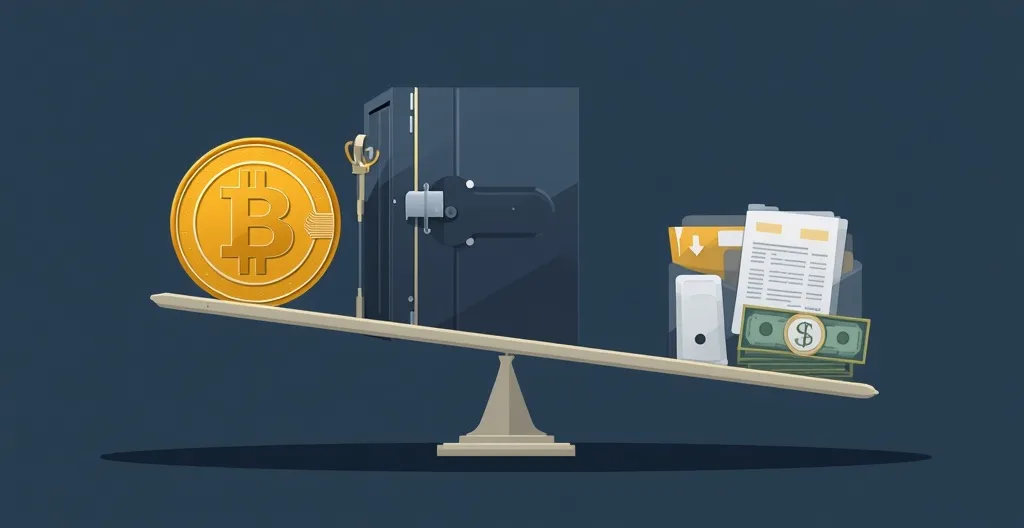
That matters because it cuts against the cartoon version of Bitcoin as a glorified leverage token that folds every time the macro tape gets ugly. Sometimes it does sell off hard. Sometimes it proves more resilient than the broader market. The honest view is simpler: Bitcoin tends to move more than the market when money gets tight, but it can also behave like a non-sovereign reserve asset when investors want something outside the usual financial plumbing.
BIT Research said the energy-to-crypto transmission channel has “clearly dulled, ” which means crypto no longer reacts to every oil spike like it is a rookie trader reading the first headline it sees. That does not make Bitcoin immune. It means positioning, derivatives flows, and rate expectations matter just as much as the war drum beat.
Iran is the bigger geopolitical risk
President Trump ordered military action against Iran, with strikes reportedly set to begin this weekend. He also expressed doubts about ongoing talks with Tehran. That alone would be enough to rattle markets.
Iranian officials have warned about retaliation against U.S. and Israeli infrastructure, including energy facilities in the Gulf and Israel. Iran has also warned that U.S. naval actions could force the closure of the Strait of Hormuz, the critical shipping chokepoint through which a large share of global oil flows.
That is the part markets care about most. Even the possibility of disruption in the Strait of Hormuz can raise shipping costs, insurance costs, and inflation expectations. If crude gets hit hard enough, yields can rise, the dollar can strengthen, and risk assets can get squeezed from multiple directions at once.
US Treasury informed banks that it may intervene in yen strength, while Iran’s Foreign Minister blamed U.S. military actions for regional insecurity, and the Islamic Revolutionary Guard Corps remains a central force in Iran’s foreign policy. The U.N. Secretary-General warned that the Iran war threatens global stability. A new AP-NORC poll shows a majority of Americans oppose the conflict, and Trump’s approval rating is reportedly dropping as tensions rise.
None of that moves the tape by itself, but it does shape the political room for escalation. Markets do not trade on morality, but they do trade on constraints, and the constraint here is that the conflict can widen fast if retaliation starts hitting energy infrastructure or shipping lanes.
Oil is the real transmission channel
BP has put its UK North Sea business up for sale, Iraq is enhancing its air defenses after U.S.-Saudi strikes on Hashed al-Shaabi, and U.S. government strikes on Iran have reportedly caused shortages in the region. Those are separate events, but together they show how fast energy risk spreads across borders.
That is why oil matters so much in this setup. If supply routes are threatened, crude can spike first and ask questions later. Inflation expectations follow, then yields, then the dollar. That chain reaction can be brutal for assets that depend on loose liquidity.
Gold initially sold off as yields rose, which should not surprise anyone who understands that higher real yields can pressure precious metals even when the geopolitical backdrop is ugly. Silver is expected to remain volatile. Safe-haven demand exists, but it still has to fight the bigger force of rates and the dollar.
If the Fed signals more hikes, the dollar could strengthen further and keep pressure on Bitcoin, gold, and other risk assets. If the Fed pivots, the opposite could happen. That is why the market is not just reacting to war headlines; it is also trying to guess whether the central bank will keep tightening the screws or finally back off.
What the crypto market structure says
Error extracting content and BIT Research’s notes give a more useful picture than broad market hand-wringing. The firm said BTC has three layers of support and resistance worth watching: $60, 000 as the main defense, a call wall that moved from $70, 000 to $72, 000, and about 39, 000 contracts sitting at that higher strike. In options terms, that means traders are clustering around those levels and paying up for volatility.
The same note said the ETH/BTC ratio has improved to 0.0299 after eight straight observations, and Ethereum has posted three consecutive weeks of outperformance. It also said an eight-week ETF outflow streak was broken. Translation: ETH is showing some relative strength, even if Bitcoin still gets most of the macro attention.
That does not mean Ethereum is immune to the same forces hitting BTC. It just means traders see different opportunities across the crypto stack. Bitcoin remains the reserve asset of the sector, while Ethereum still plays a different role in the financial plumbing. Both can be hammered by macro stress. They just do not always get hit the same way.
BIT Research also pointed to exchange reserves at a seven-year low, dormant supply at 60.8% and rising by 0.4 percentage points per month, and stablecoins holding at $310.5 billion. Those are structural details, and they matter because price is not just emotion. It is inventory, liquidity, and positioning.
The firm’s broader read was that traders are buying volatility rather than making big directional bets. That is usually what a market looks like when nobody trusts the next headline, but everyone knows the next headline will matter.
The Fed still sits in the middle of it all
Investors are seeking yield while Federal Reserve rate uncertainty hangs over everything. Some Fed governors are still supporting higher rates, while the Treasury yield curve is showing a twist that suggests the market thinks the Fed may not hike again.
That tension is the real backdrop. If rates stay higher for longer, the dollar can keep grinding up and pressure Bitcoin, commodities, and most risk assets. If the Fed softens, liquidity conditions can improve quickly. Markets are not only trading war risk or yen weakness. They are trading the likelihood of central bank relief, or the lack of it.
That is also why Bitcoin’s behavior matters. BTC is not a neat “digital gold” clone and it is not just another tech stock with a blockchain sticker on it. In stress periods, it can behave like a high-beta asset, which means it moves more than the broader market when conditions tighten. But it can also attract investors who want something outside state-controlled money and centralized balance sheets.
That tension is exactly what makes Bitcoin useful. It is not magic. It is not a hedge in every hour of every crisis. But it is one of the few assets in the room that does not need permission from Washington, Tokyo, or any other capital with a printer and a panic button.
Key takeaways
-
Why did the U.S. Treasury intervene in the yen?
Because yen weakness had become extreme enough to warrant direct action. Treasury intervention in FX markets is rare, which is why traders treated it as a serious signal. -
Why does the Iran escalation matter so much?
Because it raises the risk of retaliation, shipping disruption, and higher oil prices. That can feed into inflation, yields, and a stronger dollar all at once. -
Is Bitcoin acting like digital gold right now?
Not cleanly. BTC is under pressure below $63, 000, but market-structure data also shows it has shown resilience in past macro shocks, so the “Bitcoin only dies in risk-off” crowd should relax a bit. -
What matters more next: geopolitics or the Fed?
Both matter, but the Fed may decide how hard the geopolitical shock lands. More hikes would likely support the dollar and pressure BTC; a pivot would do the opposite. -
Which assets could benefit if fear rises further?
Oil could spike if supply routes are threatened, and gold may attract more safe-haven demand if yields stop climbing. In the short term, though, volatility itself may be the most reliable winner.
Markets are being hit by two kinds of power at once: monetary power and military power. One moves currencies with reserves and balance sheets. The other moves them with strikes and threats to shipping lanes.
Bitcoin Falls on Renewed US Strikes on Iran as Peace Deal was built to sit outside that game, and US Cracks Down on Iran’s Crypto Channels as Tehran Uses shows why that matters in practice. BTC is not immune to macro stress, but it does offer something the old system cannot: a bearer asset that does not need approval from either central bankers or war rooms. In weeks like this, that looks less like ideology and more like hard-won insurance.