
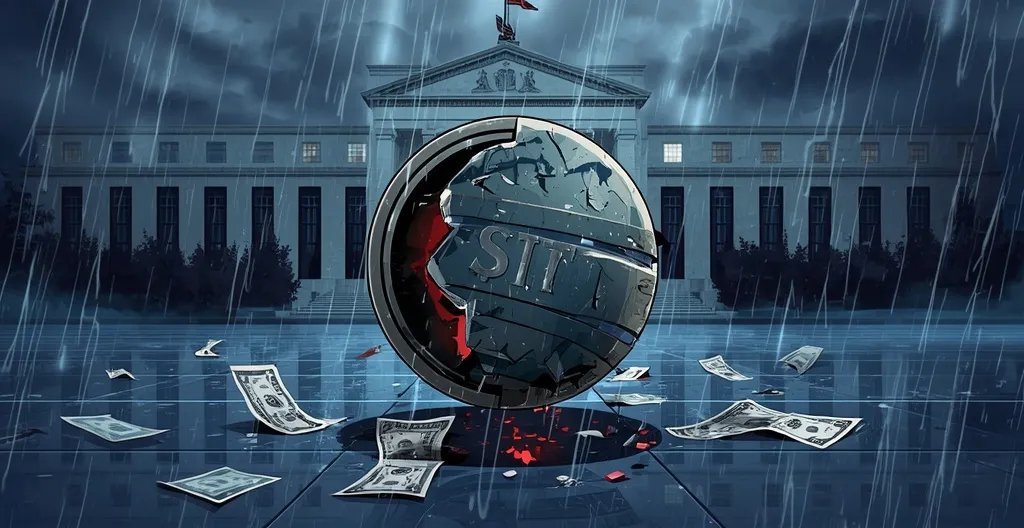
Kevin Warsh, a central banker once seen as unusually open to crypto by Fed standards, just drew a hard line: no routine bailout for crypto or stablecoins if they blow up. The caveat, as always, is that “no bailout” in Washington usually still comes with an emergency escape hatch if the whole financial system is on fire.
- Warsh’s line: “We do not want to be in the bailout business, full stop.”
- The catch: he left room for action in extraordinary systemic stress.
- Why it matters: stablecoins still sit close to banks, Treasuries, and repo markets.
- The unfinished piece: the GENIUS Act framework is still being implemented.
That’s the tension in plain English. Crypto wants to be treated like a separate species when things are good, but when a run hits, it tends to lean very hard on the same financial plumbing it pretends to be above. Funny how that works.
Warsh told the House Financial Services Committee on July 14 that “We do not want to be in the bailout business, full stop.” He also said the goal is a position where “nobody gets bailed out, crypto included.”
That is a clean message. It is also the kind of clean message central bankers love to say right before markets start coughing smoke.
Warsh’s posture matters because he is not coming at this like a reflexive anti-crypto lifer. Before confirmation, he disclosed crypto-related investments including stakes in a Bitcoin payments startup, Bitwise, a stablecoin venture, and exposure to more than a dozen blockchain protocols. Those holdings were later divested under Fed ethics rules. He has also called Bitcoin “the new gold for investors under 40, ” which is about as friendly as a central banker usually gets without asking for a hardware wallet.
But being sympathetic to Bitcoin is not the same thing as promising a rescue mission for crypto businesses or stablecoin issuers. Warsh’s message was clear: do not expect the Fed to ride in like a white knight every time a digital asset project gets itself into a mess.
That line hits a nerve because stablecoins are no longer some tiny side quest for degenerates and token promoters. They sit at the edge of traditional finance. They are designed to track the dollar, but they depend on reserves held in assets like Treasury bills, bank deposits, and other short-term instruments. In calm markets, that setup looks orderly. Under stress, it can turn into a classic run.
The Federal Reserve’s own research on the Silicon Valley Bank collapse shows why. In March 2023, Circle said it could not access $3.3 billion of USDC reserves held at SVB. USDC fell to as low as 86 cents on the secondary market. The broader Treasury/Fed/FDIC response to SVB then helped restore confidence in the banking system, and USDC recovered after redemptions resumed.
That was not a direct crypto bailout. It was a banking-system rescue that indirectly stabilized a major stablecoin. Important difference. Crypto likes to brag about being outside the system until the system breaks, and then suddenly it remembers how much it likes bank access.
New York Fed research has also warned that stablecoin stress can spill into banks. That is the part many traders would rather skip past while posting bullish charts and pretending a reserve asset is the same thing as instant liquidity. It is not. If holders stampede for the exit, an issuer may have to liquidate reserves quickly. If those reserves are tied to Treasuries, repo, or bank deposits, the stress does not stay politely inside crypto.
That’s why Warsh’s “no bailout” stance is best read as a policy preference, not a binding promise that nothing will ever happen. He left room for “extraordinary” systemic situations, which is Fed language for: do not make us swear that we will sit on our hands if the plumbing starts failing and the whole market is coughing up blood.
The legal backdrop matters too. Section 13(3) gives the Fed emergency lending authority in unusual and exigent circumstances. That same crisis toolkit, along with systemic-risk actions taken during the SVB episode, is exactly why a future crypto panic could still drag in the state even if nobody wants to call it a bailout.
The GENIUS Act is supposed to reduce that ambiguity. Its framework is meant to tighten stablecoin reserve standards, redemption rules, and insolvency treatment. The FDIC Proposed Rule on Payment Stablecoin Issuers and the framework says payment stablecoin holders rank senior to non-payment stablecoin creditors in insolvency proceedings. That is useful. It is not magical.
Priority in bankruptcy helps after the wreckage. It does not stop the wreckage. If users want out today and the market is panicking now, a legal claim on reserve assets is not the same thing as cash in hand. That is the difference between a theoretical safety net and actual liquidity.
The FDIC has also made clear that stablecoin wallets do not get ordinary FDIC deposit insurance the way bank customers do. That distinction matters, because a lot of people still blur together “backed by reserves” and “government guaranteed.” Those are not the same thing. Not even close.
Stablecoin reserve backing can reduce risk, but it does not erase run dynamics. If confidence cracks, the issuer may need to sell assets fast. That can hammer the very markets those reserves sit in. In other words: the “digital dollar” story can become a very old-fashioned run story with a blockchain logo slapped on it.
There is also a more uncomfortable point for crypto maximalists and stablecoin cheerleaders alike. The more important stablecoins become, the less credible it sounds to pretend they are just niche crypto tools with no systemic footprint. Once they are large enough and widely used enough, they become part of the financial system whether the libertarian branding team likes it or not.
That is the real meaning of Warsh’s warning. He is not saying crypto does not matter. He is saying it should not expect special treatment just because it wraps old-school risk in shiny new software.
What this means for crypto
- No routine rescue: Warsh is signaling that the Fed should not backstop failed crypto bets by default.
- Systemic risk still changes the game: if stress threatens banks or market plumbing, intervention may still happen.
- Stablecoins are not deposit accounts: holders do not get ordinary FDIC insurance.
- Rules still matter: the GENIUS framework is meant to reduce chaos, but unfinished implementation leaves gaps.
That last point is where the policy rubber meets the road. The GENIUS Act is meant to create a clearer regime for stablecoin reserves, redemptions, and creditor priority. But if the rules are incomplete, loopholes and regulatory arbitrage are going to find them. Markets are great at finding cracks. It is basically their hobby.
The broader lesson is simple: stablecoins can be useful, fast, and efficient payment rails, but they are not risk-free dollar twins. They are private liabilities backed by reserves, and that still leaves them exposed to confidence shocks, liquidity squeezes, and policy discretion. The March 2023 USDC episode was a reminder that when the pressure rises, even “crypto-native” assets end up leaning on centralized institutions to keep the lights on.
Key questions and takeaways
-
Will the Fed bail out crypto in a future panic?
Not as a routine matter. Warsh said the Fed does not want to be in the bailout business, but he did not rule out emergency action if a broader systemic crisis threatens financial stability. -
Does “no bailout” mean the Fed will never intervene?
No. In central banking, “no bailout” usually means no automatic support for failing firms. If the wider system is at risk, the Fed still has emergency tools, including Section 13(3). -
Why does the USDC and SVB episode still matter?
It showed that a stablecoin can depeg quickly when reserve access breaks down, and that a banking-system rescue can indirectly restore confidence in crypto markets. -
Are stablecoin holders protected like bank depositors?
No. The FDIC has said stablecoin wallets do not have ordinary deposit insurance. Holder-priority rules may help in insolvency, but that is not the same thing as insured cash. -
Why does unfinished rulemaking matter?
Because incomplete rules create uncertainty, loopholes, and room for firms to game the gaps before a crisis hits. That is exactly the kind of mess regulators are trying to avoid. -
What is the real risk with stablecoins?
They can look calm and reliable until confidence breaks. Then the problem is not just crypto. It can spill into banks, Treasury markets, and the rest of the financial plumbing.
Warsh’s statement is a warning shot, not a guarantee. It says the Fed wants discipline, not automatic rescues. That is the right instinct. The hard part is whether that instinct survives the first real panic, when the slogans end and the plumbing starts screaming.
Further reading
A few related reads on Fed posture, stablecoin oversight, and the GENIUS Act rollout:


