Miners hope BTC’s surge lasts as AI looks less like a sure thing
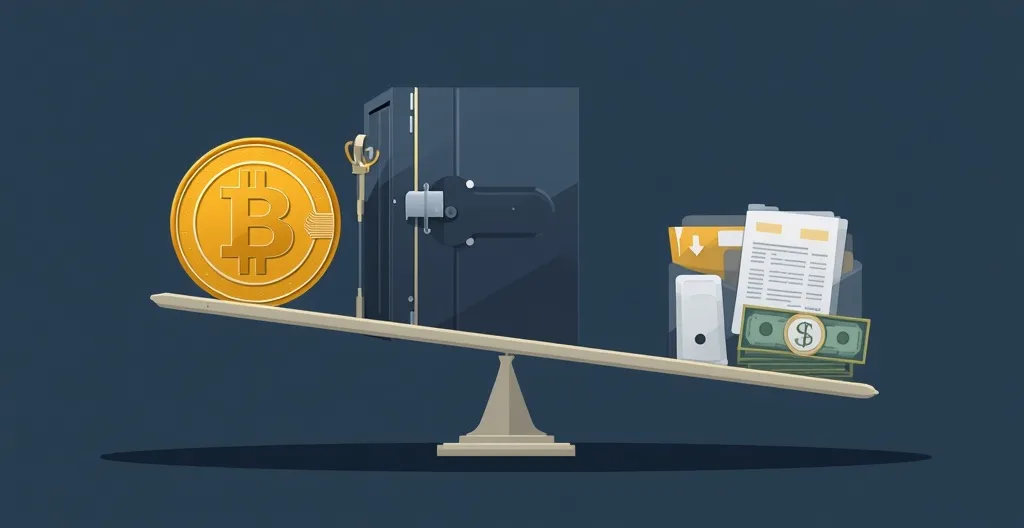
Bitcoin’s climb back toward $80, 000 has given miners a bit of breathing room, but the business is still under brutal pressure. Post-halving economics remain tight, and the supposed escape route into AI and high-performance computing is running into real political resistance.
- BTC is up, but mining margins are still ugly.
- AI/HPC pivots are real, but they are not a guaranteed lifeboat.
- Political pushback on data centers is getting harder to ignore.
Bitcoin mining is simple in concept and ruthless in practice. Miners spend electricity and hardware to compete for the right to add the next block to the chain, earning the block reward and fees if they win. Since the April 2024 halving, that subsidy has been 3.125 BTC, down from 6.25 BTC. The network also adjusts mining difficulty roughly every 2, 016 blocks so blocks keep arriving at about the same pace. Translation: the game does not get easier just because BTC rips for a week.
That is why the recent price surge matters, but only up to a point. The reporting cited here says BTC came close to $80, 000 over the past week, while the average all-in cost to mine a single coin topped $104, 000 as of Tuesday evening. “All-in cost” is a slippery metric, so that number should be treated as a reported estimate rather than some universal law of mining physics. Still, the direction is clear enough. The industry is still fighting for air.
There was some relief on the network side. Mining difficulty fell 1.3% to 125.8 trillion hashes last week, with another 1% drop projected at the next adjustment on September 6. Lower difficulty can help the operators who stay online, but it is not a cure. It is more like finding a bottle of water in the desert than discovering an oasis.
The bigger question is what miners are supposed to become next. For the last year or so, AI and HPC, high-performance computing, have been sold as the natural landing zone. The pitch is straightforward. Mining companies already own power-hungry infrastructure, cooling, and data-center real estate, so why not repurpose it for GPU workloads instead of endlessly chasing halving cycles?
That sounds elegant on a slide deck. Reality is messier.
The first problem is politics. Data centers are no longer treated as neutral infrastructure in a lot of places. Pennsylvania Gov. Josh Shapiro issued an executive order last week limiting review of data center permit applications to developers who have made a legally binding commitment to meet the Governor’s Responsible Infrastructure Development, or GRID, requirements and have received municipal approval. In plain English: if you want the permits, you do not just get to show up with buzzwords and a power-hungry rack of servers.
The political mood is not just a Pennsylvania thing either. The National Republican Senatorial Committee issued a memo warning AI operators that the Ohio Senate seat held by Jon Husted could fall to Sherrod Brown, and that data centers could become a campaign liability. The memo told operators to “fix how Ohioans see them” and warned that “data centers are the anchor hanging around Husted’s neck. If he loses and data centers get the blame, politicians across the country will take notice, and they will not go near the next one.”
That is a blunt way of saying what developers already know. If voters decide data centers are a local tax on power, water, or land, the political math can change fast.
Texas has also shown that the friendly-welcome fantasy has limits. Gov. Gregg Abbott was quoted saying data center builders “basically dug their own grave, ” and this month he imposed a “temporary” moratorium on new data center construction. Whatever one thinks of the framing, the message is obvious enough. These projects are not guaranteed a red carpet just because they are wrapped in the word “AI.”
BitFuFu: growing hashrate, but not exactly printing money
BitFuFu remains one of the more useful windows into miner economics because it still reports production data regularly. In July, the company produced 112 BTC, down from 125 BTC in June. Of that, 72 BTC came from self-mining and 40 BTC from cloud mining. End-July hashrate stood at 14.2 EH/s, EH/s means exahashes per second, a measure of mining power, and was later boosted to 20 EH/s.
CEO Leo Lu said the company drew down its BTC treasury by 357 BTC to secure additional future hashrate capacity. That is a very miner move. Spend part of the stack now to buy more odds of winning blocks later. Lu said BitFuFu “will never sacrifice unit economics simply to maintain headline hashrate, ” which is exactly the sort of sentence investors like to hear when management is trying to sound disciplined rather than desperate.
The financial picture, though, is still rough. BitFuFu reported a Q2 net loss of $20.5 million, after a $35 million loss in Q1. Revenue came in at $42.8 million, down nearly two-thirds from the same period last year and 41% below Q1’s $72.7 million. Cloud mining revenue fell from $94.3 million to $24.9 million, while self-mining revenue slipped only $800, 000 to $14 million.
That split matters. It suggests cloud mining can be far more volatile than the core self-mining operation. BitFuFu’s stock has had a short-term bounce, shares rose more than 15% in the past five days, but the bigger picture is still weak. The stock closed Tuesday down 6.3% at $1.49, is down nearly 44% year to date, and has fallen 61% over the past 12 months.
Hive Digital: the AI pivot is real, and so are the headaches
Hive Digital is leaning into HPC and AI more aggressively than most miners. That pivot looks more credible than a lot of the industry’s “we do AI now” theater because it comes with actual contracts and hardware.
The company reported fiscal Q1 losses of $143.8 million, but most of that was a non-cash provision: $84.6 million tied to regulatory liabilities in Sweden. The dispute involves contested VAT assessments and whether certain equipment and expenditures, including ASIC mining equipment, qualify for input VAT deductions. In simpler terms, Hive is fighting tax authorities over whether it can recover sales tax on hardware and operating costs. That is the sort of glamorous issue that keeps accountants awake and everyone else bored to tears.
At the same time, revenue rose 73.5% year on year and 10.2% sequentially to $79.1 million. Mining accounted for $72 million of that, while BUZZ HPC contributed $7.1 million. BUZZ HPC revenue rose by more than half sequentially, helped by new Nvidia GPUs at the Manitoba facility.
The big headline came on August 16: Hive announced that BUZZ HPC signed a $350 million, five-year GPU cloud services agreement involving more than 2, 000 NVIDIA Blackwell Ultra GPUs at the Bell AI Fabric site in British Columbia. The site runs on 100% renewable hydroelectric energy. That matters because Blackwell Ultra chips are designed for demanding AI workloads, not just generic server use, and renewable power helps sell the infrastructure as cleaner and more politically palatable than an ordinary energy hog.
CEO Aydin Kilic made the strategy plain on the earnings call:
“10% AI and 90% Bitcoin mining. Within the next few months, that is going to be 40% on the AI and 60% on Bitcoin mining.”
“100% of our growth is in HPC and AI.”
That is not a side project. It is a company trying to turn itself into a broader digital infrastructure business while still using Bitcoin mining as the cash engine.
Hive’s shares closed Tuesday up 5.6% at $3.02. They are up 17.5% year to date and 14.4% higher than the same period last year. Investors clearly like the story. Whether they like the execution once the contracts, capex, and regulatory dust settle is a different question.
Bit Digital: mining is dead, long live the treasury strategy
Bit Digital has been the loudest public skeptic of old-school BTC mining. Last year it said it was getting out of mining altogether in favor of a digital asset treasury strategy and Ethereum staking. CEO Sam Tabar did not bother with corporate perfume either, calling BTC mining “a very shitty business” and predicting last October that the sector would be “dead in two years.”
That is spicy language, but the company’s numbers still show why so many miners are trying to change lanes. Bit Digital reported Q2 mining revenue of just $2.4 million, and mining revenue over the first half of 2026 was down 58% versus the same period last year. ETH staking brought in only $900, 000 in the quarter, meaning mining revenue was nearly three times larger than staking revenue even as the company tries to move away from mining as a core identity.
Ethereum’s token price fell 44% over the past 12 months, and Bit Digital said that decline accounted for about $75 million of its Q2 net loss of $107.2 million. That is a mark-to-market hit, not a cash burn in the simple sense, but it still hurts. On the other hand, ETH has risen 28% over the past week, which is a nice reminder that crypto still loves a violent mood swing.
The company is not standing still. Cloud services revenue was $23.8 million, colocation services revenue was $4.7 million, and the cloud services unit was up 42% sequentially. Tabar summed up the strategy this way:
“It is not what we are trying to be. The goal has never been to hold the most ETH. It is to get the most out of ETH that we hold.”
That is a much saner line than the usual industry nonsense. It also shows the real tradeoff: you can walk away from ASIC mining, but you do not walk away from volatility. You just pick a different flavor of it.
Tether: even a giant balance sheet can get tangled in local power politics
Tether once sounded ready to become a mining monster. CEO Paolo Ardoino said last summer that Tether could become “the biggest Bitcoin miner in the world, even including all the public companies, ” by the end of 2025. The company backed that ambition by taking stakes in miners and suppliers and launching an open-source Mining Operating System.
Then Uruguay happened.
Tether’s Uruguay mining offshoot, Microfin, was cut off by the state utility UTE over a nearly $5 million unpaid electricity bill. Reuters reported that the collapse also involved a dispute over contracted power allocation. A former contractor said Uruguay was supposed to be the “first step” in Tether’s South American mining strategy.
The company reportedly invested $60 million in each of two sites near Florida, north of Montevideo, but the sites sat idle because they did not have enough power. That is the part people miss when they get romantic about mining at scale. You can buy the rigs, the land, and the ambition. If the utility does not cooperate, you still have a warehouse and a headache.
The timeline is messy but useful. Uruguay’s late-2024 election brought a new center-left government to power, and by March 2025 the new administration had officially taken over. Tether informed UTE in June that it would terminate its contracts. UTE cut off Microfin’s power in July. Last November, Tether told Uruguay’s labor department it would permanently shut Microfin and lay off local staff. The following month, Tether reportedly paid the overdue bill.
So much for the easy mining empire.
Enegix Global: the pivot keeps spreading
Enegix Global is another example of a miner trying to evolve into an infrastructure company. Kazakhstan announced a new program offering cheap power in exchange for BTC contributed to a state-run reserve, and Enegix runs the BTCpool.kz mining pool, launched in 2023. It also launched a similar state-sponsored mining pool in Oman.
On Tuesday, BBC News quoted CEO Yerbolsyn Sarsenov as saying the company is “moving confidently towards artificial intelligence and planning the gradual alignment of our energy and infrastructure capabilities, both in Kazakhstan and elsewhere, towards the development of AI infrastructure.”
Enegix says it is preparing to convert a “significant” portion of mining operations to AI/HPC and is in “active discussions” with potential data center clients. That may turn into something real. For now, it is still a plan, not a business model.
Key takeaways
-
Can BTC’s price surge save miners?
Not on its own. A higher BTC price helps, but post-halving mining is still squeezed by power costs, hardware costs, and network competition. -
Is AI/HPC a real exit ramp for miners?
Sometimes. Hive’s $350 million GPU deal shows the opportunity is real, but AI businesses still need customers, permits, and stable power. -
Are governments getting tougher on data centers?
Yes, at least in some places. Pennsylvania’s GRID requirements and the political warnings around Ohio show rising resistance to data-center expansion. -
Which companies look most disciplined?
BitFuFu and Hive look focused on unit economics and infrastructure growth, while Bit Digital has openly rejected pure BTC mining. Tether’s Uruguay mess shows that even huge capital does not beat local utility reality. -
Is Bitcoin mining finished?
No. It is just harsher, more industrial, and less forgiving. The easy money era is dead; the business itself is not. The halving did what halvings do: it cut the reward and exposed weaker operators.
The big picture is simple enough. BTC strength gives miners a little relief, but it does not fix a structurally tough business. The AI pivot is real, but it is not a magic escape hatch. And if local politics keeps turning against energy-hungry data centers, the next phase of this sector will belong less to the loudest promoters and more to the operators who can survive the math.
One thing is clear from the latest moves: miners are not just chasing BTC block rewards anymore, they are hunting for any revenue stream that actually clears the bill. That is why HIVE Digital completes 300 MW Paraguay Bitcoin mining buildouts matter, and why every serious operator is obsessing over power, scale, and optionality. The old “number go up” fairy tale is nice, but electricity still gets paid in real money.
If the AI side keeps getting squeezed by permits, community backlash, and policy theater, miners may need to rely more on classic Bitcoin economics than the industry’s current AI perfume campaign. That is where the legacy miner stack still has value: cheap power, hard assets, and a brutally honest cost structure. Which is exactly why some firms are buying, building, and relocating with a vengeance, as seen in Hive Digital Relocates to Texas, BitFuFu Secures 80, 000 miners from Bitmain.
Still, the miners that survive are the ones that keep adapting instead of pretending the market owes them a living. Even after huge expansions like HIVE Digital Boosts Bitcoin Mining by 317% with Paraguay hydro power acquisitions, the margins stay unforgiving. And for anyone wondering what comes next for the sector, the blunt answer is that the economics of HIVE Digital Technologies signs $350M, 5-year GPU cloud deals will likely matter just as much as block rewards.
For the miners still fighting on the front lines, the question is not whether BTC mining is glamorous. It never was. The question is whether the next hardware cycle, power deal, or AI contract keeps the lights on long enough to make the whole brutal circus worth it. And yes, the Understanding Bitcoin Halving: Impact on Price and subsidy cuts are still doing their job: reminding everyone that scarcity is a feature, not a comfort blanket.
Even the simplest mining terms remain worth keeping straight. A block reward is the newly issued BTC miners earn for finding a valid block, while hashrate is the total computing power thrown at the network. Those basics are what drive the business, whether the headline is a new GPU deal, an AI moratorium, or one of the industry’s favorite cope sessions about Bitcoin Mining in 2026: Processes, Profitability, and whether the next cycle magically fixes everything. Spoiler: it won’t.