Ondo Finance says it has launched a new class of onchain portfolio products, with strategies packaged into single transferable tokens and the first three built around BlackRock portfolio design expertise.
- New category: Ondo Intelligent Portfolios
- Format: one token representing a weighted portfolio basket
- Backed by: portfolio strategies powered by BlackRock, according to Ondo
- Access: eligible non-U.S. investors in permitted jurisdictions
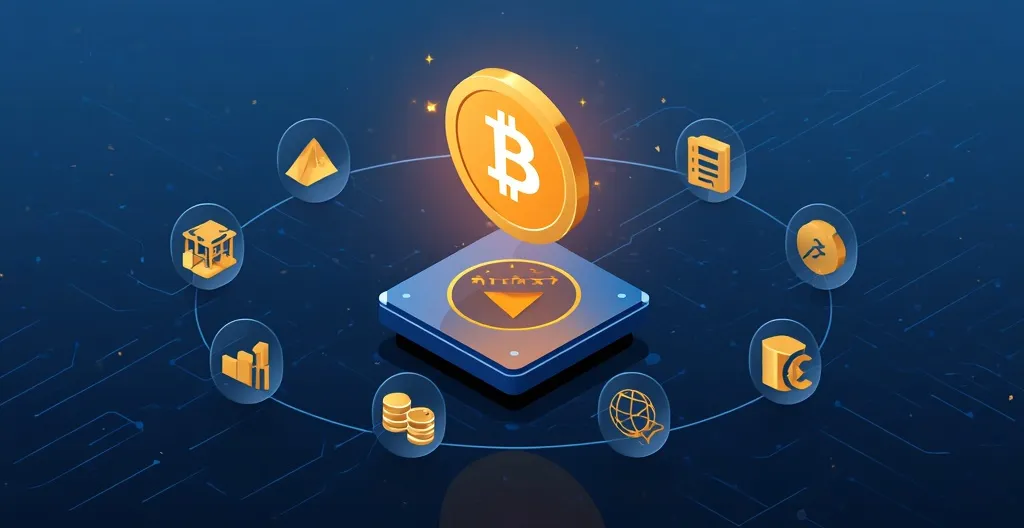
Ondo says the idea is simple: instead of building a basket of assets through traditional brokerage systems, investors can mint, hold, transfer, and redeem a single token that represents a diversified strategy. The first three launch tokens are BLKHIon, BLKDIGon, and BLKGRWon, covering income, diversified growth, and high growth approaches.
That may sound like a tidy packaging move, but the bigger shift goes beyond token names and polished branding. Ondo is trying to move portfolio construction itself onto blockchain rails. If that works, the token becomes more than a wrapper. It becomes a programmable, transferable instrument that can move across wallets, exchanges, and DeFi protocols.
For crypto, that is the interesting part. The industry has spent years tokenizing single assets, stablecoins, and treasury exposure. Tokenized portfolio strategies are the next logical step. If one asset can be represented onchain, why not a managed basket? Finance loves turning one tradable thing into a bundle and then calling it innovation. Sometimes, it even is.
Ondo says the portfolio tokens are issued by Ondo Global Markets and tokenized by Ondo Finance. Token holders get economic exposure to the underlying basket, while holdings, weights, and rebalances are visible onchain. In plain English, that means the token reflects the portfolio’s value and performance, but it is not the same thing as directly holding each underlying security in a traditional brokerage account.
That distinction matters. Economic exposure can give investors price participation and redemption rights, depending on the structure, but it does not automatically mean the same shareholder rights, voting rights, or direct custody relationship that comes with owning securities outright. Crypto marketing has a bad habit of blurring that line because nuance is terrible for hype.
BlackRock’s role, at least as described here, appears to be on the portfolio design side rather than the token issuance or custody side. Lisa O’Connor, BlackRock’s Global Head of the Model Portfolio Solutions team and Co-CIO for Global Solutions within the Multi-Asset Strategies group, said tokenization can create new ways to deliver diversified portfolio strategies through digital infrastructure.
“Tokenization creates new ways for portfolio strategies to be delivered through digital infrastructure. Diversified portfolio strategies can be incorporated into tokenized investment products, enabling eligible investors to access diversified allocations through a single instrument. It shows how established portfolio construction approaches can be delivered through new channels and technologies.”
That is a long way from the usual crypto moonboy nonsense. The point is practical: tokenization is a delivery rail, not a religion. BlackRock is talking like a large asset manager should, carefully, structurally, and without pretending blockchain is a substitute for basic portfolio logic.
Ondo’s Acting CEO and President, Ian De Bode, was more direct about the product’s appeal.
“Portfolios like these have never been available onchain. Now, they are made accessible onchain, transferable at any time, and usable across DeFi. This launch represents an important milestone in the development of onchain investment products. By incorporating strategies drawn on BlackRock’s longstanding portfolio construction experience into tokenized investment structures, eligible investors in supported jurisdictions can obtain exposure to diversified portfolio allocations through a single token.”
The phrase “usable across DeFi” is where the pitch gets more interesting, and where reality usually shows up with a clipboard. DeFi composability means an asset can potentially plug into other blockchain-based applications, but that does not mean it can roam free through every protocol without restrictions. Jurisdictional limits, eligibility checks, compliance rules, and redemption mechanics still matter. Onchain does not mean lawless. It just means the plumbing is different.
That plumbing is already a big part of Ondo’s business. Ondo Global Markets is described as an issuance and redemption platform for tokenized U.S. stocks and ETFs. According to the company’s structure, those securities-backed tokens are fully backed by the corresponding stock or ETF, together with cash in transit. That backing detail is crucial, because “tokenized” can mean anything from real exposure to a glorified spreadsheet with a blockchain sticker on it.
There is also an important regulatory reality baked into the launch: these products are aimed at eligible non-U.S. investors in permitted jurisdictions. That is not a marketing footnote. It is the core of how the product can exist at all. Tokenization does not make securities law disappear. It just gives it a new interface.
The broader signal here is clear enough. Ondo is not just tokenizing isolated assets anymore. It is trying to turn portfolio strategy itself into an onchain product category. If tokenized stocks and ETFs were the first chapter, tokenized allocation strategies are the next one.
That matters for two reasons.
First, portfolio construction is the bread and butter of mainstream investing. If blockchain rails can carry something as standard as an income or growth strategy, then tokenization starts to look less like a crypto curiosity and more like market infrastructure.
Second, it opens the door to programmability. In theory, tokenized portfolios can support cleaner settlement, automatic rebalancing, and easier movement between venues. They can also be composed with other DeFi tools. That is the part crypto gets right when it works: assets that can talk to each other instead of living in separate, walled-off systems like it’s 1998 and everyone still loves paperwork.
But the caveats are just as real.
These products are permissioned. Access is gated. The legal wrapper is doing a lot of heavy lifting. And “onchain” does not automatically mean “decentralized” in any meaningful philosophical sense. A controlled issuance and redemption structure with jurisdictional restrictions is still a controlled structure, even if it lives on a blockchain.
That is not a criticism so much as a reality check. Institutions are adopting blockchain where it improves distribution, transferability, and operational efficiency, not because they suddenly fell in love with permissionless finance. They want the speed and composability of crypto rails without handing the keys to the chaos goblins. Hard to blame them.
The launch also raises the same questions that should follow any tokenized securities product:
How are investors verified? Which jurisdictions are actually permitted? What are the fees and redemption terms? How often do the strategies rebalance? What exactly is handled onchain, and what remains in Ondo’s controlled infrastructure?
Those details decide whether this is a real improvement or just a prettier wrapper on old finance. The wrapper may be modern. The rules still need to work.
For now, the significance is less about a flashy token launch and more about what it represents: a push to make portfolio strategies portable, programmable, and potentially composable onchain. That is a serious use case, not another speculative token dressed up with institutional vocabulary.
Key questions and takeaways
-
What is Ondo Intelligent Portfolios?
It is Ondo’s new onchain product category for portfolio strategies packaged into single transferable tokens. The goal is to make diversified exposure easier to hold, move, and integrate with blockchain-based applications. -
What role does BlackRock play?
BlackRock is described as powering the portfolio strategies, with Lisa O’Connor pointing to tokenization as a way to deliver diversified allocations through digital infrastructure. The information provided supports a portfolio-design relationship, not BlackRock running the tokenization stack. -
Can U.S. investors use these products?
No. The offering is aimed at eligible non-U.S. investors in permitted jurisdictions, so access is restricted by geography and eligibility rules. -
Do token holders directly own the underlying securities?
Not in the same way a traditional shareholder does. The structure provides economic exposure to the basket, while the actual legal and operational rights sit inside the tokenized framework. -
Why does this matter for crypto?
Because it pushes tokenization beyond single assets and into full portfolio logic. If this model works in practice, blockchain rails could become genuinely useful for mainstream investing instead of just another speculative arena with better branding.
Further reading
A few related reads on tokenized portfolios, stablecoin settlement, and the wider RWA push.
- Ondo Launches Intelligent Portfolios, Powered by BlackRock
- Circle Launches StableFX for 24/7 Stablecoin FX Settlement
- Ondo Finance Brings Shareholder Voting Capabilities to Tokenized Securities
- The Crypto Conversation Podcast Feed
- A Prelude to the Theory of Real-World Asset (RWA) Tokenization
- BlackRock Portfolio Strategies Go Onchain Through Ondo
- Real-World Asset Tokenization Explained as BlackRock and Wall Street Push On-Chain Finance
- Wall Street Titans BlackRock and Apollo Dive into DeFi with $29.4B RWA Tokenization Boom