Arbitrum’s ARB token has finally caught a bid again, and the rebound looks tied less to random speculation and more to a real burst of activity around Robinhood’s new chain built on Arbitrum tech.
- ARB has risen more than 21% over the past week.
- Robinhood Chain is pulling fresh attention and usage into Arbitrum.
- New tokenomics are meant to give ARB holders a clearer link to network revenue.
- Unlocks, competition, and weak market conditions can still crush the move.
Arbitrum is one of Ethereum’s biggest Layer-2 networks, but ARB has spent much of the year looking like a token in need of a stiff drink. It climbed to roughly $0.145 in May, then sank to around $0.073 in late June before trying to recover. At the time of writing, ARB is up 3.56% in the last 24 hours and trading around $0.0956, according to the market data provided.
The spark behind the rebound is Robinhood Chain, which launched on July 1 and quickly posted eye-catching early activity. According to the figures cited, it processed 7.6 million daily transactions within its first eleven days and generated more than $568 million in on-chain trading volume on July 8. Robinhood’s 90-day gas subsidy likely helped juice that usage. Subsidies can be useful, but they also make it hard to tell how much of the demand is real and how much is just people showing up for the free lunch.
That distinction matters. A lot.
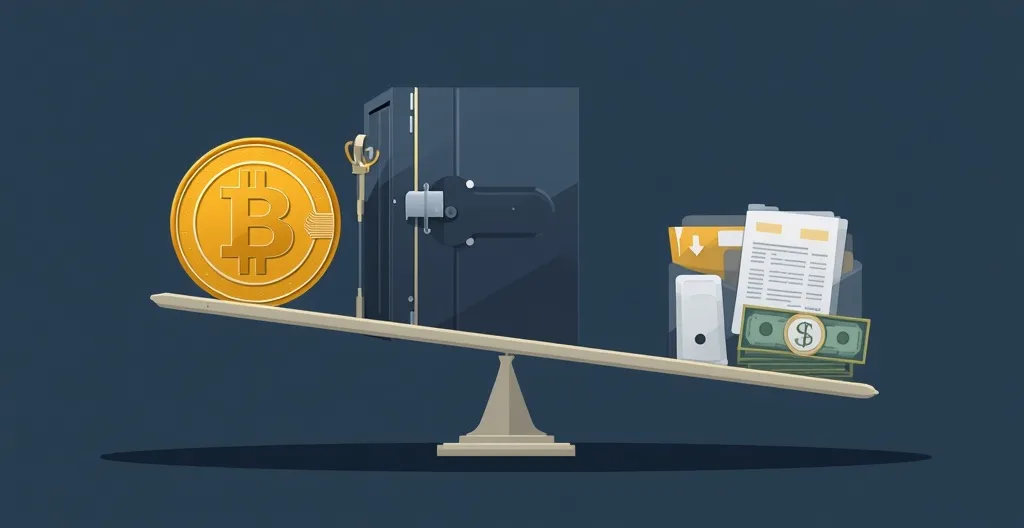
Layer-2 networks live or die on whether activity actually benefits the token, or whether the token is just a governance badge with a nice logo and a lot of cope attached. Arbitrum is trying to tighten that connection with a new value-accrual model introduced by Offchain Labs. Under the updated setup, Arbitrum One sequencer fees and a portion of Orbit chain fees are directed to ARB tokenholders, according to the provided material.
Sequencer fees are the charges collected for ordering transactions on a Layer-2 network. Orbit chains are chains built using Arbitrum’s tech stack. In simple terms: if the network gets used, the token is supposed to get a more direct economic link to that usage than it had before. That is the whole pitch. Whether the market treats it as meaningful or just another governance brochure is the real test.
Arbitrum’s footprint is still substantial. The ecosystem is described as holding between $16 billion and $18 billion in total value, and there are over 100 Orbit chains running on top of it, according to the source material. It remains a major Ethereum scaling venue, which is a good place to be if you want relevance and a bad place to be if you enjoy easy competition, because the Layer-2 arena is crowded with aggressive rivals like Base, Optimism, and zkSync.
Then there’s the part nobody likes to talk about when the chart is green: supply. Roughly 90 million to 100 million ARB reportedly enter circulation each month through scheduled unlocks. That kind of steady dilution can weigh on price even when the underlying network looks healthier. New demand has to absorb new supply first, and the market is usually less romantic about that than token promoters are.
The governance side is also heating up. The Arbitrum Foundation is requesting $43.5 million, or 230 million ARB, to cover operations until 2027. Delegate reaction has been broadly supportive of the Foundation’s role, but not blindly so. The main pushback centers on transparency, clearer KPIs, and whether the size of the request is justified given the Foundation’s existing resources. One delegate noted that the Foundation already holds 208 million ARB in its treasury, which makes the new ask look a lot less like pocket change and a lot more like a serious treasury decision.
That scrutiny is warranted. Crypto governance too often devolves into “trust us, bro” with better typography. Arbitrum’s debate is more serious than that, but the underlying question is the same: are tokenholders actually benefiting from ecosystem growth, or are they just financing an ever-expanding machine that promises value later and bills now?
With fundamentals still messy, traders are watching the chart for confirmation. ARB has broken out of its July range and moved from around $0.073 to a test of $0.10. The RSI is near 60 and the Ultimate Oscillator is around 52, which suggests improving momentum without screaming that the move is already overheated. If ARB closes a daily candle above $0.10, the next area traders are watching is $0.11 to $0.12. If it fails to hold above $0.095, first support sits around $0.088, with stronger support near $0.080.
Those indicators can help frame short-term sentiment, but they are not prophecy. Technical analysis is useful right up until the market decides to act like a drunk raccoon with a brokerage account.
At $0.0956 per token, a $5, 000 position would buy about 52, 300 ARB. From there, the scenarios are straightforward:
- At $0.11, that position would be worth about $5, 750, a gain of roughly 15%.
- At $0.13, it would rise to about $6, 810, or roughly 36% higher.
- If ARB falls to $0.08, the position would drop to about $4, 185, a loss of roughly 16%.
That math is useful, but it is still just math. The bigger question is whether this rebound is the start of something sturdier or just a relief rally fueled by short covering, a flashy new launch, and traders trying to front-run the next headline.
The honest answer is probably a mix of both. Arbitrum has real strengths: scale, strong Ethereum alignment, an active ecosystem, and a more serious attempt to tie network usage to tokenholder value. It also has real problems: ongoing unlock pressure, fierce competition from other Layer-2s, and a market that will not give it credit for “potential” forever.
If Robinhood Chain keeps its momentum after the gas subsidy glow fades, and if the fee-sharing model proves more than a governance talking point, ARB could keep rebuilding its case. If not, the token may slip back into that familiar crypto purgatory: a useful network trapped inside a frustrating chart.
Key questions and takeaways
-
Why is ARB rebounding now?
Robinhood Chain’s launch has brought fresh usage and attention to Arbitrum, while short covering and a better tokenomics narrative are helping sentiment. -
What makes the new fee model important?
It is meant to give ARB holders a more direct link to network revenue through sequencer fees and a share of Orbit chain fees, which could strengthen the token’s economic case if the model holds up. -
What is the biggest risk to the rebound?
Scheduled unlocks, competition from other Layer-2s, and broader market weakness can all overpower the current optimism fast. -
Is Robinhood Chain’s early activity enough to prove long-term demand?
Not yet. Subsidized traffic can spike fast and fade just as quickly once the incentives dry up, so durability matters more than the first splashy numbers. -
What does a $5, 000 ARB position look like from here?
At around $0.0956, $5, 000 buys roughly 52, 300 ARB. That could grow to about $5, 750 at $0.11 or about $6, 810 at $0.13, but it could also fall to around $4, 185 if ARB slips to $0.08.
Arbitrum is trying to do what many crypto networks talk about and few actually pull off: turn real usage into real token value without turning governance into a circus. That is the part worth watching, because the price action is just the loudest symptom. The economics underneath are the real test.
Further reading
A few useful links for digging deeper into ARB, Arbitrum’s tech stack, and the Robinhood Chain angle.
- What $5, 000 in Arbitrum (ARB) Could Be Worth by the End of
- Yahoo Finance coverage of Arbitrum’s Robinhood Chain rally
- DefiLlama’s overview of metrics tracked on Arbitrum
- Inside Arbitrum Nitro
- Robinhood Chain’s $568M day and the fee-revenue blueprint for ARB
- Robinhood Chain testnet launch with Chainlink and asset tokenization
- Arbitrum DAO hacked: phishing scams and DeFi security flaws
- Mutuum Finance and Arbitrum: underrated crypto tokens to watch in 2025