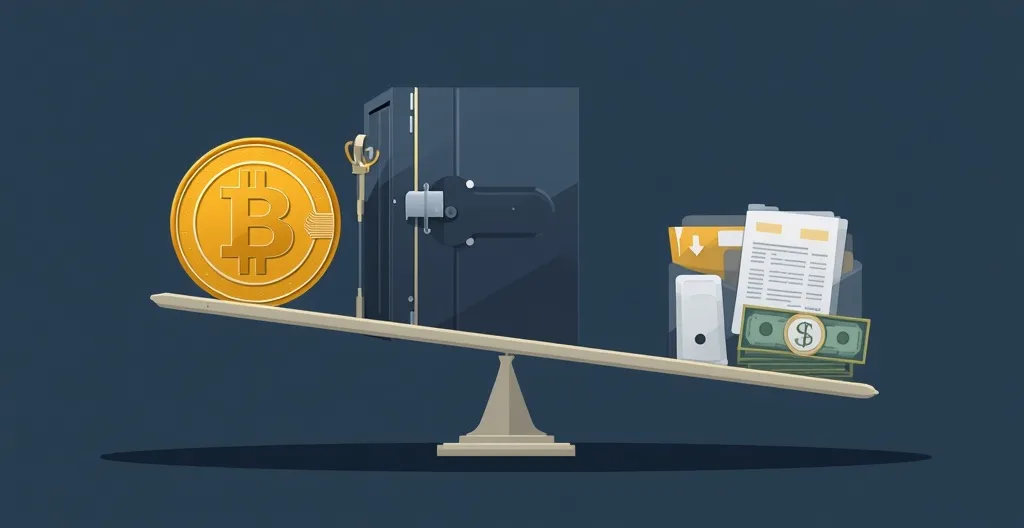
Bitcoin’s latest governance fight comes down to a simple question with ugly consequences: should fee-paying users be free to put data on-chain, or should the protocol step in and say “enough” once that data starts looking like spam?
- Adam Back and Michael Saylor oppose BIP 110 as fork risk.
- Luke Dashjr says the proposal is needed to curb non-financial data abuse.
- Miner support remains very weak, with signaling reported near zero.
- The real dispute is whether Bitcoin should stay maximally neutral or enforce stricter data limits at the consensus level.
BIP 110, formally called the Reduced Data Temporary Softfork, is a proposed temporary soft fork that would tighten Bitcoin’s rules around certain kinds of transaction data. In plain English, it would make it harder to cram images, files, and other arbitrary payloads into the chain.
The proposal would restrict several data-heavy methods, including some Taproot-related features. It would keep OP_RETURN outputs within an 83-byte limit, restrict several payloads to 256 bytes, and apply extra rules to certain transaction constructions. It also exempts UTXOs created before activation. UTXOs, or unspent transaction outputs, are the basic spendable units in Bitcoin.
That may sound like plumbing drama for protocol nerds, but the stakes are real. If BIP 110 is accepted, it would mark a clear move toward using consensus rules to keep Bitcoin focused on monetary use. If it fails, the message is just as clear: users paying fees can use block space as they see fit, even if some of that usage looks like digital trash to other people.
According to a July 12 summary by Wu Blockchain, Adam Back and Michael Saylor both came out against the proposal. Back argued that the plan tries to police transactions other users choose to send, which clashes with Bitcoin’s decentralized and permissionless design. He also warned that forcing the rules without broad agreement could push supporters into a separate chain.
Saylor’s warning was even more direct. He said, “BIP 110 turns a spam dispute into a consensus change” and called that precedent “extremely dangerous”.
That’s the heart of the backlash. Bitcoin already has plenty of room for disagreement over mempool policy, miner behavior, and fee economics. But when a fight over “spam” gets elevated into a network-wide rule change, the argument stops being about taste and starts being about governance.
To unpack that a bit: mempool policy is how nodes and miners decide which transactions they relay or prioritize. Consensus rules are the hard rules that define what counts as a valid block. Those are not the same thing, and Bitcoin debates get messy when people blur them together on purpose or by accident.
Luke Dashjr remains on the other side. On July 6, he said, “It’s too late to cancel BIP110.” His view is that Bitcoin needs to stop serving as a dumping ground for non-financial data, especially through use cases like Ordinals and Runes.
For newcomers: Ordinals are a method of inscribing data, often images or text, onto individual satoshis. Runes are a token protocol built on Bitcoin that also consumes block space with data-heavy activity. Some people call that innovation. Others call it chain graffiti. Both camps have a point, which is exactly what makes Bitcoin such a headache and a marvel.
The mechanics of BIP 110 are worth understanding, because this is not just a vague anti-spam gesture. The modified activation process would allow miners to lock in the change if 1, 109 of 2, 016 blocks signal support, which equals 55%. That is not a giant supermajority, and critics see that as a problem for a proposal touching consensus rules.
Why does that matter? Because Bitcoin changes are only as stable as the agreement behind them. If a proposal gets pushed through with thin support, different parts of the network can end up enforcing different rules. Even a soft fork, a rule-tightening upgrade that older nodes can usually still follow, can turn messy fast if coordination breaks down.
That risk is not theoretical. Reporting published July 12 said miner signaling was at zero in the active period, and earlier periods reportedly never rose much above 1%. No major mining pool had publicly supported the proposal. So while the debate is loud, the actual traction looks close to nonexistent.
That weak support matters because miners are only one piece of the puzzle. Exchanges, wallets, node operators, and other economic actors still have to decide what software and rules they will run. The materials note an August planning window for those groups, which is the kind of deadline that can decide whether a contentious change stays a theory or turns into a real-world coordination problem.
Supporters of BIP 110 say the proposal is about protecting Bitcoin’s monetary function. Their argument is straightforward: arbitrary data raises storage and validation costs, clutters the chain, and can push more users toward intermediaries. And intermediaries are easier to pressure than a node network that actually gives a damn about decentralization.
That is the strongest pro-BIP case. Bitcoin block space is scarce. If people want to use it for payments, fine. If they want to turn it into a permanent data warehouse, the network starts drifting away from the job it was built to do.
But the critics’ case is strong too. Bitcoin’s value proposition rests on neutrality. If users are paying fees, they should be able to use block space as the market allows. Once protocol developers start deciding which fee-paying transactions are acceptable and which are not, the network moves from permissionless infrastructure toward managed infrastructure. That is not a small philosophical shift. It is a big, dangerous one.
BIP 110 also goes beyond a simple “stop the JPEGs” argument. The proposal tightens rules around multiple forms of transaction data, including some Taproot-related constructions. Taproot was a Bitcoin upgrade that expanded scripting flexibility and privacy, so restrictions there are not trivial. That is why critics treat BIP 110 as a precedent-setting move rather than just another anti-spam patch.
So yes, both sides have a case. Data-heavy usage can burden nodes and push up fees. But using consensus changes to decide what content is “acceptable” is exactly the sort of slope Bitcoin was supposed to avoid. The question is not whether block space has costs. It obviously does. The question is who gets to decide how those costs are managed: the market, or the protocol itself.
That is why this debate is bigger than OP_RETURN limits or inscriptions. It is a fight over whether Bitcoin’s rules should stay as neutral as possible, or whether the network should actively constrain certain uses to preserve its monetary purpose. One side sees defense. The other sees censorship. Depending on where you stand, both words fit a little too well.
Key questions and takeaways
-
What is BIP 110?
It is a proposed temporary soft fork called the Reduced Data Temporary Softfork that would restrict certain kinds of data storage and script usage on Bitcoin. -
What does BIP 110 change?
Among other things, it keeps OP_RETURN at 83 bytes, limits some payloads to 256 bytes, and tightens rules around some Taproot-related transaction data. -
Why are Adam Back and Michael Saylor against it?
They say it turns a spam dispute into a consensus change, which they see as a dangerous precedent and a threat to Bitcoin’s permissionless design. -
Why does Luke Dashjr support it?
He sees Ordinals, Runes, and other data-heavy uses as abuse that increases the burden on Bitcoin and distracts it from being a monetary network. -
Is miner support strong?
No. The reporting cited here says signaling was at zero in the active period, with earlier support never getting much above 1%, and no major mining pool had publicly backed the proposal. -
Could BIP 110 split Bitcoin?
It could, if different parts of the ecosystem enforce different rules without broad agreement. Even a soft fork can create fragmentation if coordination fails. -
What is the real issue underneath the spam fight?
Whether Bitcoin should preserve neutral, fee-driven block space or use protocol-level restrictions to keep the chain focused on money.
Right now, BIP 110 looks highly controversial but short on visible traction. That is usually a bad place for any contentious Bitcoin change to sit. If the proposal is going anywhere, it will need more than moral outrage and protocol theory. It will need broad, ugly, hard-earned consensus, the sort Bitcoin demands when people start trying to rewrite its rules.
Further reading
A few more sources for anyone tracking BIP 110 and the broader blockspace fight.
- Understanding Yahoo's Consent Page and Its Implications
- BIP-110 Proposal and Its Impact on Bitcoin's Future
- bips/bip-0110.mediawiki at master
- What Is BIP-110? Bitcoin's Data-Limit Proposal and the
- Bitcoin BIP-110 Debate: Saylor Warns of Protocol Risks Amid
- Saylor Says BIP 110 Turns Bitcoin Spam Fight Into a
- Bitcoin BIP-110 Sparks Blockspace Fight Over Spam and