The CFTC has sent prediction market rules to the White House while courts keep splitting on “swap”
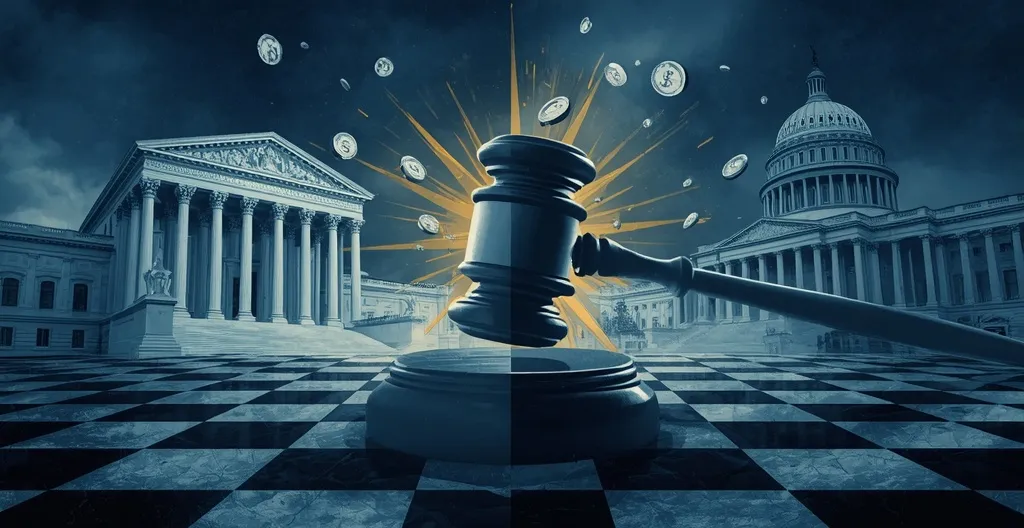
The Commodity Futures Trading Commission has sent two prediction market rule actions to White House review even as federal courts keep fighting over whether certain event contracts fall under commodities law or state gambling law.
- Two CFTC submissions hit OIRA on September 28
- One proposal would include event contracts in the swap definition
- One interim rule would exclude casino-style gambling products
- The Sixth Circuit has just ruled that certain sports contracts were not swaps
That is the legal knot in plain English. Washington is trying to draw a line, and the courts are already drawing their own. The result is a tug-of-war between federal derivatives oversight and state gambling authority, with prediction markets caught in the middle and plenty of lawyers getting paid along the way.
On September 28, the CFTC sent two event-contract-related actions to the Office of Information and Regulatory Affairs, the White House review office that checks regulatory submissions before publication. One is titled “Further Definition of ‘Swap’ to Include Event Contracts” and is listed as a proposed rule. The other is titled “Further Definition of ‘Swap’ to Exclude Casino-Style Gambling Products” and is listed as an interim final rule.
That does not mean the rules were already live. As of October 1, neither September 28 submission was a published, operative rule. OIRA review is a step in the process, not the finish line. The paperwork has moved; the law has not yet.
The fight starts with one word: swap
The legal dispute over prediction markets turns on whether a contract is a swap under U.S. commodities law. If it is, the CFTC has a strong claim to jurisdiction. If it is not, state gambling law can still apply.
A swap is a derivatives contract whose value depends on an underlying event or asset. In this debate, that can involve things like sports outcomes, elections, or inflation readings. But the legal question is not whether an event is involved. It is whether the contract structure fits the statutory definition of a swap under the Commodity Exchange Act.
That distinction matters because labels change jurisdiction. If a market is treated as a swap, the federal framework comes into play and preemption arguments get sharper. If it is treated as gambling, state regulators get more room to move. That is why a single word can cause this much chaos.
Federal preemption is the argument that federal law overrides conflicting state law. Prediction market platforms have leaned on that theory to argue that their products belong in the federal system, not under state gaming restrictions. States, naturally, are not thrilled about being told their gambling laws should sit quietly in the corner.
The courts are not waiting for Washington
Just days before the CFTC submissions hit OIRA, the Sixth Circuit ruled on September 25 in disputes involving Ohio and Tennessee. According to the summary available here, the court held that the sports contracts before it were not swaps and allowed Ohio and Tennessee to apply state gambling laws.
That matters because it cuts against the broader preemption argument prediction-market operators have been pressing. The court was not declaring every event contract to be gambling in the abstract. It was deciding whether specific sports contracts belonged under the federal derivatives regime or could instead be regulated by the states.
There is also an earlier Third Circuit opinion in New Jersey that was more favorable to Kalshi’s federal-preemption argument. So the appellate picture is already messy, and that is putting it politely. Different circuits are not exactly reading from the same hymn sheet.
The result is a split that keeps the issue alive. Courts are deciding real disputes. Regulators are trying to build a broader rule set. Those two processes can coexist, but they can also collide head-on.
Prediction markets are not one product class
One problem with the term prediction markets is that it makes a lot of different contracts sound like the same thing. They are not.
Some event contracts track sports. Some track elections. Some track economic data like CPI, which measures consumer price inflation. Others are structured in ways that look much closer to wagering than to hedging or price discovery. The legal and policy issues are not identical across those products, and pretending otherwise is how bad rules get written.
The CFTC’s advance notice suggests the agency knows that. According to the notice, it sought information on core principles, public-interest review, inside information, and the types of event contracts that may be prohibited. That reads less like a one-off reaction and more like an attempt to build a broader framework around a market that has grown up faster than the rulebook.
The same notice said designated contract markets certified about 5 new event contracts per year on average from 2006 through 2020. It also said they certified approximately 1, 600 new event contracts in 2025. That is a huge jump, and it helps explain why regulators are suddenly paying attention.
One important caveat: that 1, 600 figure is a count of listed contracts, not trading volume. Those are very different numbers. A contract can be listed without meaning it saw heavy activity. Confusing listing counts with actual market activity is how people end up making confident claims from weak data.
What the CFTC seems to be trying to do
The two September 28 filings suggest the agency may be trying to separate legitimate derivatives-style event contracts from products that look more like casino gambling with a compliance sticker on top.
That instinct is understandable. A well-designed event contract can help with price discovery, hedging, and information aggregation. A poorly designed one can become a shiny way to package betting and call it finance. Not every contract tied to an event deserves the same treatment.
But there is a real danger on both sides. If the CFTC draws the line too broadly, it could sweep in contracts that really do belong in a federal market framework. If it draws the line too narrowly, bad actors can keep dressing up wagering as innovation and slipping through the cracks.
That is the hard part: drawing a boundary that is strict enough to stop abuse without choking off useful products. Easy to say, much harder to write into regulation without creating a fresh pile of litigation.
Why states, platforms, and users care
This is not just an abstract fight over statutory definitions. The outcome affects who gets to supervise these markets in practice.
For platforms like Kalshi and Polymarket, the stakes are obvious. Federal treatment can mean broader room to operate. State gambling treatment can mean enforcement actions, restrictions, or outright shutdown pressure. For states such as Ohio, Tennessee, and New Jersey, the issue is whether they keep authority over products that look and feel like bets, even if they are dressed up as financial contracts.
For users, the stakes are more practical than philosophical. If a platform is operating under a federal derivatives framework, there may be different compliance rules, disclosure standards, and market integrity expectations than if the product is regulated as gambling. That affects how much protection traders actually have when things go sideways.
And things can go sideways. Event markets can be manipulated. They can attract wash trading. They can also confuse customers who think they are trading information when they are really taking on a highly stylized bet. There is a real public-interest question here, not just a turf war between regulators.
That is why the CFTC’s use of a phrase like “casino-style gambling products” is worth watching closely. It signals an attempt to exclude products the agency views as too close to wagering. Whether the final text draws that line cleanly, or sloppily, will matter a lot more than the title alone.
For more context, see how CFTC moves to regulate crypto prediction markets as sports contracts face scrutiny, and the broader political backdrop in Trump backs prediction markets as CFTC, states clash over Kalshi and Polymarket.
What happens next
For now, the process is still moving. OIRA review comes first. Then publication, if and when the agency gets there. After that, comments, possible revisions, and likely more litigation. Because of course there will be more litigation. This is U.S. financial regulation. The lawsuits are practically part of the product.
The bigger question is whether the CFTC’s eventual text will clarify the market or deepen the mess. Without the full rule language, nobody should pretend to know the answer yet. Titles tell you the direction of travel, not the full destination.
What is already clear is this: prediction markets are no longer some tiny corner of finance that can be ignored. They have become a serious legal and regulatory fight over what counts as a financial product, what counts as gambling, and who gets to decide the difference.
That shift has not gone unnoticed in Washington or on Wall Street. As prediction markets are no longer a curiosity, Wall Street is paying attention, because the money trail has a way of waking up even the sleepiest institutions.
Key takeaways and questions
-
What did the CFTC send to the White House?
Two event-contract rule actions on September 28: one proposed rule to broaden the swap definition to include event contracts, and one interim final rule to exclude casino-style gambling products. -
Are those rules already in force?
No. As of October 1, neither submission was a published, operative rule. -
What did the Sixth Circuit decide?
In disputes involving Ohio and Tennessee, the court held that the sports contracts before it were not swaps and allowed the states to apply gambling laws. -
Why does the word “swap” matter so much?
Because that label decides whether federal derivatives law applies and whether states can still regulate the product as gambling. -
Are all prediction markets the same?
No. Sports, elections, and economic-data contracts can raise very different legal and policy issues. -
Why are regulators focused on this now?
The CFTC said listed event contracts jumped from about 5 per year on average from 2006 through 2020 to approximately 1, 600 in 2025. -
What does this mean for traders and users?
It affects which rules apply, which regulators have power, and how much protection or scrutiny these markets get.
Prediction markets can be useful. They can surface information, price uncertainty, and create new financial tools that old institutions often fail to provide. That is the upside, and it is real.
But there is a darker side too. Some of these products are just gambling with better branding. Some can be manipulated. Some sit in a regulatory gray zone because the industry would very much prefer the gray zone to remain cozy and profitable.
That is why this fight matters. The CFTC is trying to write the rulebook. The courts are already testing the edges. States are defending their turf. And the final answer on where prediction markets belong is still being argued out in real time.
For readers watching the legal paper trail, the documents themselves matter too: Verification Successful: Waiting for Response from the CFTC press office points to the agency’s own announcement flow, while the filing date on July 27, 2026 helps anchor the regulatory timeline in black and white.
And if you want the raw court paperwork, Please provide the HTML content so I can extract or is the sort of PDF link that reminds everyone this fight is being decided in dense legal filings, not slick marketing decks.
The broader federal machinery is also moving: the CFTC has already been expanding leadership as prediction markets face U.S. regulatory crackdown, which is what agencies do when a niche issue stops being niche and starts becoming a political and market problem.
Meanwhile, the Sixth Circuit dispute itself has drawn plenty of attention, including in coverage of Kalshi's 6th Circuit battle, which has become the latest chapter in the regulatory war with states.
For anyone tracking how these markets are being framed inside the bureaucracy, the policy road map is not subtle: the CFTC has been expanding leadership as prediction markets face U.S. regulatory crackdown, and the whole debate is bound up with who gets to define these products in the first place.
Prediction markets may be useful, absurd, or both at once. That is fine. The problem is not that they exist. The problem is pretending the line between information markets and plain old betting is obvious when it is anything but.
And yes, that line still has to be drawn by humans, in suits, with federal forms, which is either reassuring or terrifying, depending on how much faith you have in bureaucracy.