
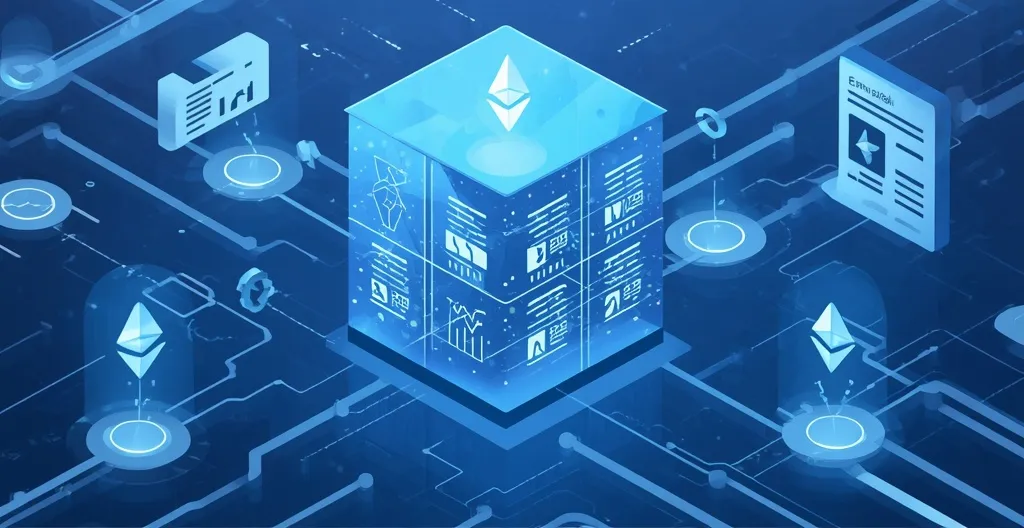
Ondo Finance and Broadridge are pushing tokenized securities deeper into the U.S. market, but the real headline is structure, not hype. The move works with existing securities rules instead of trying to bulldoze them, which is exactly why it matters.
- Ondo Advances Tokenized Securities in the US
- The launch includes IVV ETF exposure and Micron shares
- Ethereum is the blockchain used for issuance
- Broadridge handles proxy voting and disclosures
- The SEC’s securities rules still apply
According to Broadridge’s July 2, 2026 announcement, Ondo Finance launched what it described as the first live custodial tokenized U.S. securities solution operating within the existing regulatory perimeter in the United States. The rollout includes tokenized exposure to BlackRock’s iShares Core S&P 500 ETF (IVV) and Micron shares (MU), with the tokens issued on Ethereum.
That’s a meaningful step, even if the finance world loves to bury real progress under a pile of compliance jargon. Tokenized securities are not a loophole. They are a new wrapper around old assets, and the wrapper only matters if it can survive the very unsexy machinery of custody, ownership records, shareholder rights, and regulation.
Tokenized securities are traditional financial assets, stocks, ETFs, bonds, or fund interests, represented as tokens on a blockchain. In practice, that means a token can stand in for an interest in a security, but the legal rights behind it depend on the structure. The blockchain changes the rails. It does not erase securities law with a magic wand.
That distinction is the whole point here. The U.S. Securities and Exchange Commission has already made clear in its January 2026 statement that tokenized securities are still securities. The format does not change the rules. What changes is how the asset is recorded, transferred, and administered.
Broadridge says the model behind Ondo’s launch is custodial: the underlying securities remain in the traditional custody chain, while Ondo’s registered transfer agent mints 1:1-backed tokens. Broadridge also says it will provide proxy voting, issuer communications, and regulatory disclosures through its ProxyVote.com platform.
That may sound dull. It is also the part that decides whether tokenization becomes real market infrastructure or just another crypto side project dressed up in institutional drag.
Why does the custody structure matter so much? Because the U.S. market does not run on vibes. It runs on legal claims, transfer agents, custodians, disclosures, and shareholder rights. If a tokenized security cannot preserve those basics, it is not market innovation. It is a liability with a marketing budget.
The SEC’s January 2026 statement is useful here because it separates tokenized securities into different models, including issuer-sponsored and third-party-sponsored structures. Ondo’s setup falls into the third-party custodial bucket, which is the tricky one. The SEC has also noted that third-party tokenization can create extra risks tied to the third party itself, including bankruptcy and operational risk. Translation: if the intermediary breaks, the token holder may have a mess on their hands.
That’s the sober side of the story, and it should not be glossed over. Tokenization can improve access, programmability, and settlement efficiency. It can also add counterparty layers if the structure is sloppy. Blockchain is not a virtue signal. It’s a tool. A tool with sharp edges, like all useful tools.
Broadridge is leaning hard into the infrastructure angle, arguing that the setup supports investor confidence, accountability, and governance. That pitch makes sense. If a tokenized ETF or stock exposure is going to be taken seriously by institutions, it needs to preserve the boring essentials: voting, disclosures, and a clear chain of legal entitlement.
Ondo, meanwhile, is presenting itself as more than a one-off headline machine. Broadridge says Ondo’s Global Markets platform outside the U.S. already supports more than $1 billion in tokenized securities across 430+ tokenized stocks and ETFs. That does not prove broad adoption, but it does suggest the company is not starting from zero.
Still, a healthy dose of skepticism is warranted. Claims like “first live” and “operating entirely within the existing regulatory perimeter” come from the companies involved. Those are important claims, but they are not the same thing as a sweeping regulatory blessing for every future tokenized security product. Structure matters. Rights matter. Compliance matters. The legal fine print is where these things either work or fall apart.
The bigger picture is fairly clear: tokenization in the U.S. is maturing by fitting into the system rather than pretending the system does not exist. That will disappoint the loudest decentralization absolutists, but it is also why this could actually scale. Markets tend to reward things that work, not things that merely sound rebellious on a conference stage.
If Ondo and Broadridge can make tokenized securities function inside the U.S. framework, with custody, disclosures, proxy voting, and real legal accountability intact, then blockchain starts to look less like casino wallpaper and more like market infrastructure. Not overnight, not cleanly, and not without risk. But that is the lane where real adoption usually happens.
Key takeaways
-
What did Ondo and Broadridge announce?
They announced a U.S. tokenized securities setup that Broadridge says operates within the existing regulatory perimeter. -
Which assets are included?
The launch includes tokenized exposure to BlackRock’s iShares Core S&P 500 ETF (IVV) and Micron shares (MU). -
Why does Ethereum matter here?
The tokens are issued on Ethereum, showing that public blockchain infrastructure is being used for regulated financial products, not just speculative trading. -
What is the main difference between tokenization and ownership magic?
Tokenization changes how a security is represented and transferred, but the legal rights behind it still depend on custody, transfer-agent structure, and securities law. -
Does this mean the SEC has approved all tokenized stocks?
No. This is a specific custodial model, not a blanket green light for every tokenized security product in the U.S. -
Why is Broadridge important?
Broadridge is handling proxy voting, issuer communications, and regulatory disclosures, which are essential if tokenized securities are going to behave like real securities instead of glorified database entries.
Further reading
A few useful sources if you want to go a layer deeper on tokenized securities, U.S. securities law, and the plumbing behind this market.
- SEC written input on Ondo Finance
- What tokenization doesn’t change: the SEC reaffirms the securities-law framework
- TD Securities deep dive on tokenized equities
- Ondo and Broadridge bring voting rights to tokenized stocks and ETFs
- Ondo tokenizes BlackRock ETF and Micron shares on Ethereum under SEC-backed structure
- Bitcoin dips below $89K: market correction, SEC rules, and Sony’s blockchain bet shake crypto


