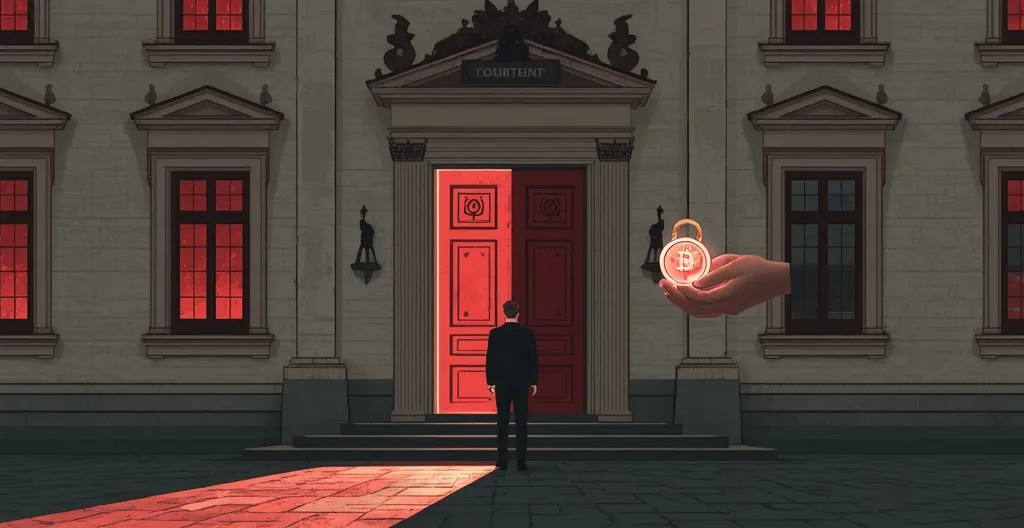
Poland’s proposed national sanctions regime could allow the interior minister to restrict a person’s property without first obtaining court approval. But it remains unclear whether the bill explicitly covers cryptocurrency or whether the Sejm has passed it.
- Ordo Iuris says the bill would give the interior minister control of a domestic sanctions list.
- The organization warns that the proposed powers could extend beyond asset freezes.
- The bill’s specific treatment of crypto still needs to be confirmed.
- A reported Nov. 6 vote has not been verified by an official record.
What the proposed sanctions regime would do
The proposal, which legal organization Ordo Iuris identifies as Sejm print no. 3003, would create a Polish system for listing individuals and organizations considered security threats. In its analysis, Ordo Iuris says the interior minister would decide who goes on the list and impose restrictions.
According to the organization, those restrictions could limit access to assets and economic resources. Ordo Iuris also argues that the bill could allow authorities to take over the administration of a business, force its sale, or transfer ownership to the State Treasury or another entity.
These measures are different. An asset freeze restricts dealings with property. A forced sale or transfer of ownership would go further. These broader powers are Ordo Iuris’ interpretation of the proposal and need to be assessed against the bill’s exact wording. They do not mean that the state would automatically take ownership of listed people’s property.
Ordo Iuris is a legal advocacy organization that opposes the bill. Its claims about the proposal’s meaning and constitutionality are arguments, not court rulings.
Has the Sejm passed the bill?
A Nov. 6 vote of 240 to 202, with one abstention, has been reported. The year and result have not been confirmed by an official voting record, so the bill’s current status remains unclear.
Ordo Iuris describes earlier stages of consideration, including a first reading on Sept. 3 and committee reports adopted on Oct. 19 and Oct. 21. Its account does not show that the Sejm later approved the bill or sent it to the Senate. The proposal should not be called law unless its passage and subsequent legislative steps are verified. The Sejm’s list of draft legislation sent for consultation offers an official parliamentary reference point.
Does the bill cover cryptocurrency?
The available description of the bill does not establish that it explicitly names crypto, exchanges, virtual currencies or self-custodied wallets. Before claiming that cryptocurrency is explicitly covered, the bill’s relevant definitions, such as “assets, ” “property” and “economic resources, ” and any amendments to them need to be checked in the bill text.
The distinction between custodial and self-custodied crypto matters. An exchange or other custodian holds assets for customers. Someone with a self-custodied wallet controls the private keys used to move funds. Control of those keys is different from legal authority to restrict a person’s conduct. The proposal’s specific obligations for service providers, and how authorities could enforce restrictions involving self-custodied wallets, are not established here.
Nothing in the available information supports the claim that the bill would freeze cryptocurrency held by everyone in Poland. The proposal is described as a sanctions regime targeting people and organizations placed on a list.
EU sanctions law and the government’s rationale
The government says the proposal is part of Poland’s implementation of European Union Directive 2024/1226, which concerns criminal offenses and penalties for violations of EU restrictive measures. Ordo Iuris’ draft law on restrictive measures analysis argues that the directive does not require Poland to create a separate national sanctions list, and that the bill’s listing provisions go beyond what EU law requires.
The distinction matters. Setting penalties for violations of EU sanctions is not necessarily the same as creating a domestic process to designate additional people and restrict their property. The government’s rationale and Ordo Iuris’ criticism remain competing positions unless the bill’s explanatory documents and provisions settle the question.
This sanctions proposal is separate from MiCA, the EU framework focused mainly on crypto service providers, licensing and related market activity. Sanctions powers and rules for crypto businesses address different issues, including the role of major technology companies in cryptocurrency.
Due process and speech concerns
Ordo Iuris says a ministerial listing decision could take effect immediately, without the affected person taking part in the process or seeing the case file beforehand. The organization also argues that restrictions could remain in force after a voivodeship administrative court sets a decision aside, until that judgment becomes final.
Those claims raise questions about notice, access to evidence, judicial review and when a court’s decision provides relief. The bill’s text needs to be checked to establish the exact procedure. Ordo Iuris’ account is not an independent judicial finding.
Ordo Iuris also objects to proposed grounds for listing that it says cover information manipulation, personal associations and the likelihood that resources could support a sanctioned party. It argues that these concepts are too broad or unclear. The organization acknowledges amendments excluding statements and journalistic or publishing activity, but says those protections may be limited if the minister considers the conduct deliberate and an instance of actual manipulation.
That qualification matters. Concerns about possible effects on the media or public expression do not prove that the bill would target journalism. The final wording and how authorities apply it will determine the rules’ practical reach.
Key questions and answers
-
Would the proposal allow asset restrictions without a prior court order?
Ordo Iuris describes a ministerial listing process in which restrictions could take effect immediately. The bill’s text needs to be checked to confirm the safeguards and review process.
-
Does the bill explicitly cover cryptocurrency?
That has not been established. The bill’s definitions and any provisions naming cryptoassets or crypto service providers need to be checked before making that claim. Questions about how AI agents interact with cryptocurrency are separate from what this proposal expressly covers.
-
Would the proposal freeze everyone’s crypto in Poland?
No general freeze has been established. The proposed system applies to individuals and organizations designated under a national sanctions regime.
-
Has the Sejm passed the bill?
A Nov. 6 vote of 240 to 202 has been reported, but its year and result have not been confirmed by an official voting record. The bill’s current status is unclear.
-
Is this the same as MiCA regulation?
No. The proposal concerns sanctions and restrictions on designated parties. MiCA primarily governs crypto markets and service providers.
The key question is whether Poland can enforce sanctions effectively while protecting people from mistaken or overly broad designations. The answer depends on the bill’s final scope, evidentiary standards and review process. First, though, the Sejm’s actual decision needs to be confirmed.