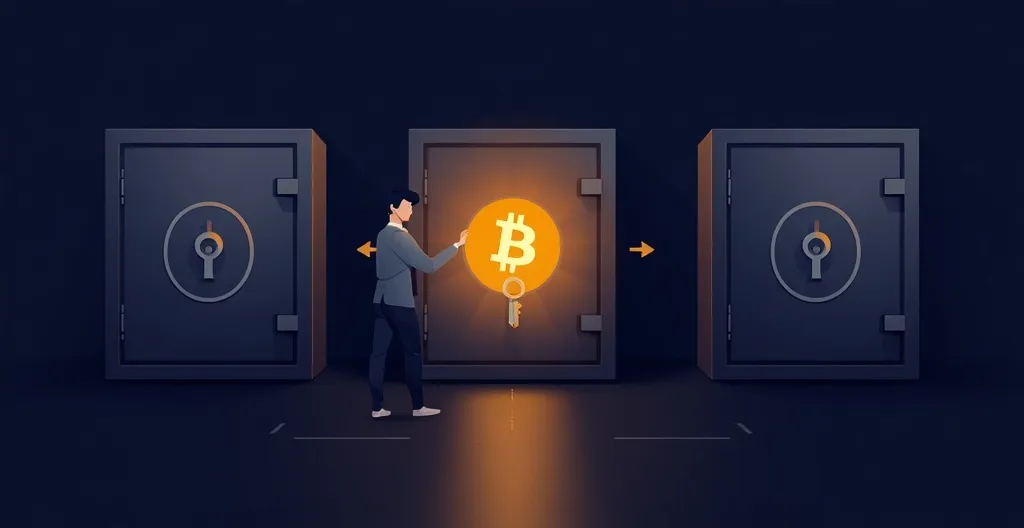
Bitcoin bridges market speed as convenience, but Rootstock co-founder Sergio Lerner says speed can also turn a validation bug into a total loss.
- He wants mandatory withdrawal delays on bridge systems
- Liquid’s recent peg-out mess shows why instant settlement is risky
- Rootstock already uses a 4, 000-block delay enforced by PowHSMs
- BIP-443 could one day support Bitcoin-native vault-style protections
Lerner’s point is blunt: if a bridge can move funds the moment software says “yes, ” then one bad check can become an irreversible drain before anyone has time to react.
Speaking to crypto.news, the Rootstock co-founder said a mandatory time-delay lock would give operators a window to detect suspicious activity, patch the problem, and stop real BTC from leaving too soon.
“Without a time-delay lock, a single validation bug and a total loss become the exact same event, because funds move the moment software says ‘yes, ’” Sergio Lerner said.
The timing of his warning matters. A Liquid Network incident reportedly involved about 4, 000 BTC leaving the federation wallet through an unauthorized peg-out tied to unbacked L-BTC. The reported sequence is ugly: SideSwap processed the request because the L-BTC appeared valid, Liquid described the actors as purported white-hat hackers, and Blockstream later confirmed affected bridge nodes had been patched.
According to the figures cited in the reporting, the Liquid federation paid 3, 996 BTC to the supplied Bitcoin address about 23 minutes later. The actors later returned 3, 400 BTC, leaving about 598 BTC outstanding.
That last part is exactly why bridge design deserves more than hand-wavy confidence and a prayer. Once a system settles too quickly, a validation failure can become a real loss before humans can even finish reading the alert.
A time-delay lock changes that dynamic. Instead of letting funds move immediately, the system holds the withdrawal for a defined period. That gives monitoring systems and operators a chance to notice something is wrong, pause the process, and respond before the BTC is gone for good.
The tradeoff is obvious. Delay improves security, but it also slows legitimate users and creates a liveness problem: the system can be safe and still be annoying, stuck, or temporarily frozen during emergencies. That is the price of not building a beautiful little theft machine by accident.
Rootstock already leans into that tradeoff. Lerner pointed to its 4, 000-block withdrawal delay, enforced through PowHSMs and the security model, as a working example of how time can be built into the security model.
PowHSMs are hardware security modules that hold and use keys without exposing them directly. In Rootstock’s model, they independently verify that 4, 000 Rootstock blocks have passed before signing a peg-out. Lerner said that works out to roughly 36 hours of cumulative proof-of-work.
That matters because the delay is enforced by the hardware itself, not just by polite promises from operators. In Rootstock’s security design, even a colluding majority of pegnatories cannot simply force an early withdrawal if the hardware refuses to sign before the delay has elapsed.
“Even a colluding majority can, at worst, halt the peg, but they cannot force an unauthorized withdrawal, ” Lerner said.
That does not mean the system is magic. It means the system is trying to make theft harder than sabotage. A peg can still be halted, delayed, or made miserable. But that is not the same as letting funds walk out the door because one validator or one piece of software got it wrong.
Lerner’s broader point is that high-value systems should treat time as a security control, not as dead weight. That can mean different delay lengths for different transaction sizes, or thresholds tied to cumulative proof-of-work. In plain English: the bigger the withdrawal, the more room there should be to notice if something stinks.
He also pointed to BIP-443 as a possible future building block for Bitcoin-native vault protections. BIP-443 is a draft soft-fork proposal for OP_CHECKCONTRACTVERIFY, or OP_CCV, a mechanism that could support more advanced spending conditions and state-carrying UTXOs.
For readers not fluent in Bitcoin opcode soup: a soft fork is a backward-compatible protocol change that tightens the rules without breaking older nodes. A UTXO, or unspent transaction output, is the basic unit Bitcoin uses to track spendable coins. “State-carrying” means an output can carry extra rules or contract logic, which can be useful for vaults, covenants, and other more advanced designs.
BIP-443 remains in draft status, and no activation path has been determined. So this is not a near-term switch that will suddenly make Bitcoin bridges safer overnight. It is a possible foundation, not a finished product.
That distinction matters. Bitcoin governance moves slowly for a reason. Big protocol changes are hard to coordinate, and every new opcode draws out the usual crowd of prophets, panic merchants, and keyboard engineers who are certain the sky is falling because someone mentioned a soft fork.
The real debate here is the old crypto tradeoff: security versus liveness. Stronger controls can protect funds, but they can also delay honest users and create new chokepoints if emergency powers are centralized or abused. A freeze button is useful. A freeze button held by one administrator is just a future scandal waiting to happen.
Lerner’s answer is distributed revocation controls using hardware-enforced rules rather than centralized admin keys. That keeps the emergency brake from becoming a censorship tool. If a system is going to have a pause button, the button should not be sitting on the desk of one overpaid clown with a webcam and a god complex.
The upside of this approach is straightforward. A bridge bug does not have to become a catastrophe if the system is designed with enough friction to catch the problem first. The downside is equally real: more friction means slower withdrawals, more coordination, and a less graceful user experience.
That is the price of not treating “instant” as a synonym for “safe.” In bridge design, speed is not a virtue if it turns every bug into a bank run.
Key takeaways and questions
-
Why does Sergio Lerner want withdrawal delays?
Because instant settlement can turn a validation bug into an immediate loss. A delay gives operators time to detect suspicious activity and stop funds before they move. -
What happened with Liquid Network?
Reporting says an unauthorized peg-out involving unbacked L-BTC led to about 4, 000 BTC being withdrawn from Liquid’s federation wallet. The timeline includes 3, 996 BTC paid out, 3, 400 BTC later returned, and about 598 BTC still outstanding. -
What does Rootstock already do?
Rootstock uses a 4, 000-block withdrawal delay enforced through PowHSMs, so the signing hardware itself refuses to authorize peg-outs until the waiting period has passed. -
What is BIP-443?
BIP-443 is a draft Bitcoin soft-fork proposal for OP_CHECKCONTRACTVERIFY, or OP_CCV. It could support more advanced output restrictions and vault-style logic, but it is still only a proposal. -
Is a delay always good?
No. Delays can improve security, but they also slow honest users and can create censorship or liveness problems if emergency controls are centralized or abused. The trick is building safeguards without turning the bridge into a bureaucratic hostage situation.
The useful lesson is simple: when the failure mode is losing real BTC, time is not a nuisance. Time is a security control.
Further reading
A few related pieces worth a look if you want more context on security, self-custody, and Rootstock’s Bitcoin-DeFi angle.
- Bitcoin time-delay locks could prevent bridge bugs
- How to Reset Your Creativity Without Leaving Home
- Rootstock's Security Innovations: Merged Mining and Defense
- Time-Delayed Recovery Vaults for Bitcoin Self-Custody
- Rootstock Pushes Bitcoin DeFi With Lower Fees, EVM Support
- Rootstock Slashes Fees by 60%, Boosts Speed and EVM
- Foundry Enhances Rootstock Security via Bitcoin Merge Mining