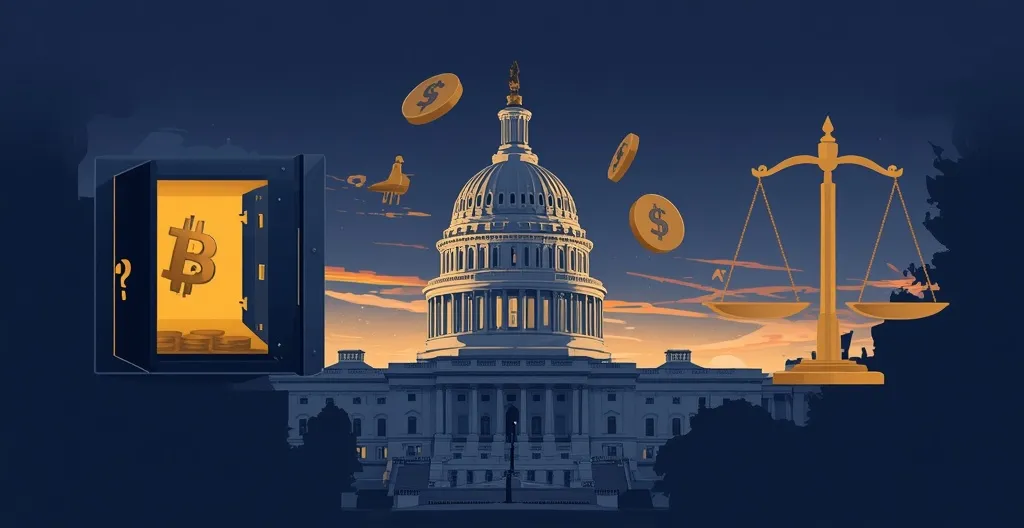
Three major crypto policy battles take shape in Washington ahead of 2027
Washington’s crypto debate is narrowing to three fights: how much room the SEC should give crypto fundraising and tokenized securities, whether the U.S. should hold Bitcoin for decades, and whether senior officials should be able to profit from crypto ventures while in office.
- Senate Democrats want the SEC to withdraw two measures covering fundraising and tokenized securities.
- A bill proposing a Strategic Bitcoin Reserve has reached the House Union Calendar, but no floor vote has been reported.
- Representative Maxine Waters says she will investigate President Donald Trump’s crypto businesses and push for conflict-of-interest legislation.
Control of key congressional committees overseeing financial regulation could shift after the 2026 elections, before the new Congress takes office in January 2027. That makes the SEC measures and proposed legislation especially consequential. None of these disputes has been resolved.
One regulatory fight, two SEC measures
Senators Elizabeth Warren, Chris Van Hollen and Tina Smith have asked SEC Chair Paul Atkins to withdraw the agency’s proposed Regulation Crypto Assets framework. The SEC introduced the proposal on August 18, and the public consultation period ended on October 20. It remains a proposed rule.
The proposal would create two fundraising exemptions for eligible crypto projects. Under one, a project could raise up to $5 million over four years without registering the offering through the conventional securities-registration process. A separate exemption would cover offerings of up to $75 million in each 12-month period, with additional disclosure and reporting obligations.
The proposal also includes a conditional safe harbor for certain assets first offered through investment contracts. An issuer could qualify after completing, or permanently discontinuing, the essential managerial activities it had promised and submitting the required documentation. In practice, the provision could give some projects a path out of securities-law obligations once that promised work is finished or abandoned. Federal prohibitions against fraud and market manipulation would remain in place.
Supporters may view the exemptions as a way to give eligible projects clearer rules and room to raise capital. The senators seeking withdrawal oppose the framework. What investor protections it would provide depends on the final requirements and how the SEC applies them. Neither is settled while the measure remains a proposal.
A second dispute centers on the SEC’s September innovation exemption for tokenized-securities venues and qualifying liquidity providers. Van Hollen, Warren, Smith and Senator Jack Reed have asked the agency to withdraw it.
Tokenized securities are traditional securities represented or traded as digital tokens. The exemption would let participating platforms operate without conventional exchange-registration requirements, subject to conditions. The senators warned that this could create a shadow stock market with weaker pricing and transparency safeguards.
The market is already moving. OKXICE, a joint venture between crypto exchange OKX and Intercontinental Exchange, launched on November 23. It proceeded with six companies: Coinbase, Robinhood, Strategy, Circle, Securitize and BitGo. That list should not be mistaken for six conventional public stocks. The reported launch details do not establish that every named company’s publicly traded shares were being offered. OKXICE also confirmed 113 assets for a phased rollout, though how that total relates to the six initial company names is unclear.
Of 62 companies initially approached, 56 reportedly opposed tokenization of their shares. That resistance is a reminder that a digital representation of a security isn’t automatically something its issuer wants traded on a new venue.
In a September 17 statement, Atkins called the exemption a temporary arrangement pending longer-term rulemaking. He said participating platforms must meet sanctions requirements, restrict access to eligible participants and ensure tokenized shares carry the same shareholder rights as conventional shares. Companies can object to having their securities traded on participating venues.
Those conditions matter, but they don’t answer every question about execution, pricing or enforcement. Tokenized trading could make securities easier to access and transfer. A digital wrapper alone doesn’t guarantee better price discovery or stronger investor protections. The senators’ “shadow stock market” warning describes a risk they say the exemption could create, not proof that every participating venue already lacks safeguards.
A proposed Bitcoin reserve advances, with big questions unresolved
The American Reserve Modernization Act of 2026, introduced by Alaska Republican Representative Nick Begich, was placed on the House Union Calendar on November 24. The House Financial Services Committee approved it in September by a 28-21 vote, with Republicans in favor and Democrats opposed.
If enacted, the bill would give the Treasury Department 180 days to establish a Strategic Bitcoin Reserve and a separate stockpile for other government-held digital assets. Bitcoin deposited in the reserve would generally have a minimum holding period of 20 years.
For Bitcoin advocates, a federal reserve could signal that the government sees BTC as a long-term asset rather than simply something to sell. But practical questions remain. The details provided don’t specify how the reserve would be supplied or funded, or how its holdings would be managed and accounted for.
Placement on the Union Calendar doesn’t mean a floor vote has been scheduled, much less that the bill has passed. Journalist Eleanor Terrett suggested a House vote before the end of 2026 was unlikely. The bill’s path forward remains uncertain.
Waters targets Trump’s crypto ventures
Representative Maxine Waters, the ranking Democrat on the House Financial Services Committee, says she will investigate Trump’s crypto businesses and prioritize the proposed Stop TRUMP in Crypto Act. Her November 25 statement came after Trump’s latest gathering for holders of his Official Trump (TRUMP) meme coin.
Waters alleged that Trump earned $635 million in royalties from the token in 2025, while its price fell from around $74 to below $1. The figure is Waters’ allegation. The available details don’t explain how it was calculated or whether “royalties” refers to gross receipts, fees or another measure. The amount could not be independently verified. The reported price decline, by itself, doesn’t establish how much Trump earned.
First introduced in May 2025, the proposed Stop TRUMP in Crypto Act would restrict the president, vice president, members of Congress and their immediate families from issuing, promoting or receiving compensation from specified digital-asset activities.
The broader question is whether public officials should be able to use the influence of their office while holding financial interests in crypto ventures. That warrants scrutiny. So does the scope of any restrictions. Rules should address conflicts clearly without becoming a vague political weapon. Waters has promised an investigation, but its findings are not yet known.
Key questions and answers
-
What would the SEC’s crypto fundraising proposal allow?
It proposes exemptions that would let eligible projects raise up to $5 million over four years or up to $75 million in each 12-month period. The larger offering would come with additional disclosure and reporting obligations.
-
Why are senators concerned about tokenized securities?
They warn that venues operating without conventional exchange-registration requirements could weaken pricing and transparency safeguards. The SEC says participating platforms would have to meet specific conditions, and companies can object to having their securities traded there.
-
Would the proposed Bitcoin reserve hold Bitcoin permanently?
The bill would generally require Bitcoin deposited in the reserve to be held for at least 20 years. It has not become law, and the details provided don’t specify how the reserve would be supplied or funded.
-
What does Waters want to investigate?
She says she will investigate Trump’s crypto businesses and prioritize legislation restricting specified digital-asset activities by senior government officials and their immediate families.
-
Have the SEC measures or reserve bill been finalized?
No. The fundraising framework remains a proposal, senators have asked the SEC to withdraw its tokenized-securities exemption, and the reserve bill has reached the House Union Calendar without a reported floor vote.
The next test is whether these proposals survive political scrutiny and whether their safeguards can be made specific and enforceable. That will help determine whether new ways to raise capital and trade assets broaden access, or leave investors facing familiar risks under a newer name.