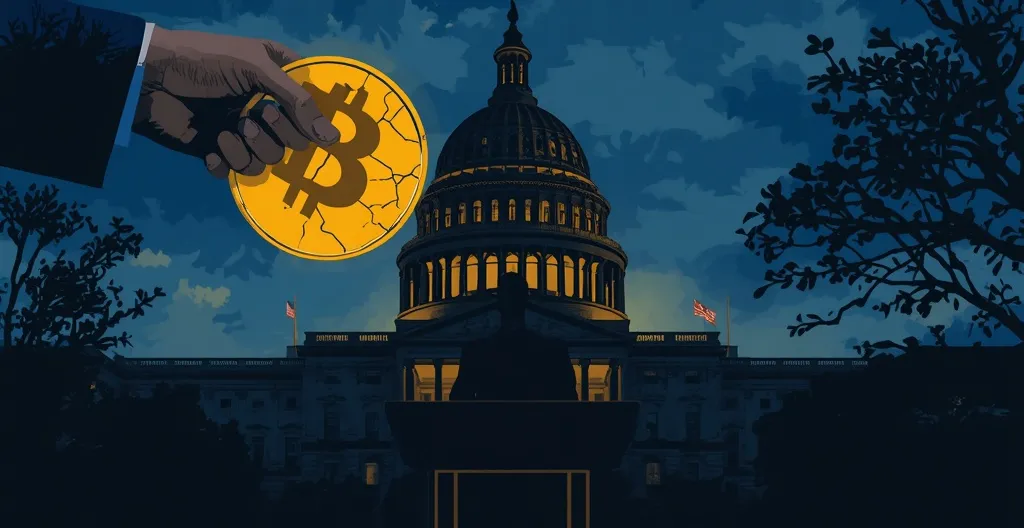
California moves to block public officials from cashing in on meme coins
California Governor Gavin Newsom signed AB 2409 on Sept. 27, creating a new state-level ban on public officials issuing meme coins and adding restrictions on certain official-linked tokens starting Jan. 1, 2027. The state also paired that move with SB 1208, a separate measure that expands digital-asset seizure and money-laundering tools.
- Public officials barred from issuing meme coins
- Official-linked tokens face added limits from Jan. 1, 2027
- Newsom’s line: “No official should profit off their office”
- SB 1208 expands California’s crypto seizure framework
The political target is obvious. Newsom tied the law to Donald Trump’s crypto ventures, including the Official Trump meme coin, and cast the crackdown as an ethics move. That framing is not subtle, but it is also not baseless: meme coins are often speculative, personality-driven assets, and public office should not become a personal token launchpad. That part is simple. The ethics of it are not.
What AB 2409 actually does
AB 2409 bars covered state and local public officials from issuing meme coins. It also restricts certain official-linked tokens issued on or after Jan. 1, 2027.
The bill defines “issuance” broadly: making a token available for public purchase, donation, or exchange of value, whether or not it is actively promoted. In other words, a public official does not have to blast the thing on social media for the law to matter. If the token is made available to the public in a way that fits the statute, it can fall under the ban.
The law covers elected and appointed state and local officials, state legislators, and members of government boards, commissions, and committees. It also reaches certain government employees with decision-making authority over bids and contracts. That last category matters because corruption rarely announces itself with a neon sign. Sometimes it hides inside procurement, permissions, and “just following up” emails.
Assemblymember Avelino Valencia introduced AB 2409 on Feb. 20, 2026. The Assembly passed it 77-0 in May, and the Senate approved it 40-0 in August. That kind of unanimous support suggests lawmakers saw this as an ethics problem first and a crypto problem second.
Why California is drawing this line now
Newsom made the motivation plain. As he put it:
“No official should profit off their office.”
The governor’s office linked the legislation to Trump’s crypto-related business activity and the Official Trump meme coin. According to reporting cited by the governor’s office, nearly one million TRUMP buyers had collectively lost more than $3 billion, while Trump earned hundreds of millions of dollars connected to the token.
Those figures are politically loaded, so they deserve careful reading. The buyer-loss number depends on methodology, timing, and whether unrealized losses are being counted. But the larger point remains straightforward: when a public figure can profit from a token tied to their own name, the line between branding and self-dealing gets muddy fast.
That is exactly the kind of setup lawmakers tend to hate once the headlines get ugly. A meme coin tied to a politician is not just a joke asset with a face on it. It is a potential conflict-of-interest machine wrapped in internet culture and speculative fervor.
The Assembly Banking and Finance Committee described meme coins as digital assets associated with internet memes, public figures, events, or trends whose value can depend heavily on speculation and community interest. That is a polite way of saying these things often trade on vibes, loyalty, and FOMO more than on actual utility.
What the SEC says about meme coins
The federal angle matters here too. In a February 2025 staff statement, the U.S. Securities and Exchange Commission’s Division of Corporation Finance said transactions involving meme coins fitting its description generally do not constitute securities transactions under federal securities laws.
The SEC staff also warned that purchasers of those tokens do not receive the protections of those laws. That means no securities-law style disclosure regime, no standard investor protection wrapper, and no reason to pretend a meme coin is magically safer just because it looks like a token with a mascot.
The SEC described meme coins as digital assets associated with memes, characters, current events, or trends, usually driven by speculation and community interest. It is a reminder that “not a security” is not the same thing as “good investment.” A collectible can be fun. It can also be a bag of hot air with a ticker symbol.
That federal position matters because it helps explain why California framed AB 2409 as an ethics and anti-corruption measure rather than a securities crackdown. The state is not saying meme coins are illegal across the board. It is saying public office should not be used to mint them for personal gain.
What California did not do
AB 2409 is not a blanket ban on meme coin trading in California. It does not force every existing political token off platforms either.
That distinction matters. The law targets the conduct of covered officials and some official-linked token listings starting in 2027. It does not outlaw speculative tokens just because they are dumb, overhyped, or built around a joke that went too far.
There is still plenty of room for practical questions. The law’s language around tokens offered by, or in partnership with, a public official will likely matter a lot in enforcement. Crypto projects love intermediaries, affiliates, and carefully worded relationships that are meant to look one step removed from the person actually benefiting. That trick may not age well under a statute designed to look past the marketing gloss.
There is also the broader issue of interpretation. If a token is launched through a foundation, a partner, or some other legal wrapper, courts and regulators will have to decide whether the structure changes the underlying reality. In crypto, structure is often just camouflage with a better website.
California also tightened its crypto seizure and laundering tools
Newsom signed SB 1208 alongside AB 2409, giving California a second tool aimed at digital assets tied to crime.
Senator Tim Grayson introduced SB 1208 in February. During legislative consideration, the California Department of Justice was listed as the source. The measure extends California’s existing money-laundering statute to qualifying digital-asset transactions until Jan. 1, 2032.
It also creates procedures for prosecutors and law enforcement to pursue assets linked to crimes through search warrants and forfeiture proceedings. Authorities can seek warrants identifying the amount of digital assets to be seized from exchanges, issuers, custodians, or other locations. They may also issue written freeze requests, and a centralized exchange, issuer, or other recipient must freeze the identified assets for 10 calendar days.
That freeze period is not a magic wand, but it is meaningful. Crypto can move fast, and giving law enforcement a short but definite hold window can make the difference between recovering assets and watching them disappear into the digital fog.
Verified victims can seek compensation through the court process. Remaining assets can stay in law enforcement or prosecutorial custody for up to three years, and anything left undistributed after that must go into California’s Restitution Fund for victim services.
So California is doing two things at once: telling public officials they cannot turn their office into a meme coin side hustle, and giving law enforcement clearer tools to freeze and seize digital assets linked to crime. That is a fairly direct message: the state is not interested in pretending crypto abuse is some mystical new category that nobody can touch.
Why this matters outside California
California still sets the tone for a lot of policy fights, especially on tech and regulation. If AB 2409 survives scrutiny and is enforced cleanly, other states may copy it or build around it.
That would not be the worst outcome. Public office should not be a monetization engine for speculative tokens that rise and fall on personality cults, outrage cycles, and social media fumes. If a politician wants to sell merch, that is one thing. If they want to profit from a token tied to their office or persona, that is much harder to defend.
At the same time, overreach would be a mistake. Crypto is full of messy structures, and the line between legitimate branding, campaign-adjacent promotion, and outright abuse can get blurry fast. Regulators will need to be precise or they will end up confusing genuine activity with the garbage they are actually trying to stop.
The strongest version of this policy is narrow and obvious: no public official should be able to use the authority and visibility of office to pump a speculative token. Anything broader risks turning a useful ethics rule into another bureaucratic mess with good intentions and bad outcomes.
Key questions and takeaways
-
Is California banning all meme coins?
No. AB 2409 targets public officials issuing meme coins and adds limits on certain official-linked tokens. It does not create a blanket ban on meme coin trading. -
What counts as “issuance” under the law?
The statute treats issuance as making a token available for public purchase, donation, or exchange of value, even if it is not heavily promoted. -
Why is this framed as an ethics issue?
Because the central concern is public officials profiting from their office. California is treating official-linked meme coins as a conflict-of-interest problem. -
Do meme coins fall under federal securities law?
The SEC staff said meme coins fitting its description generally are not securities transactions under federal securities laws. That does not mean they are safe or protected by those laws. -
What does SB 1208 change?
It expands California’s digital-asset money laundering and seizure framework, including freeze requests, forfeiture procedures, and victim compensation routes. -
Why should crypto users care?
Because state regulators can still act when federal rules are fuzzy. If officials and promoters keep turning crypto into a personal cash machine, lawmakers will keep responding with tighter rules.
Further reading
A few extra references worth keeping on hand if you want the policy, SEC, and meme-coin angles in sharper focus.