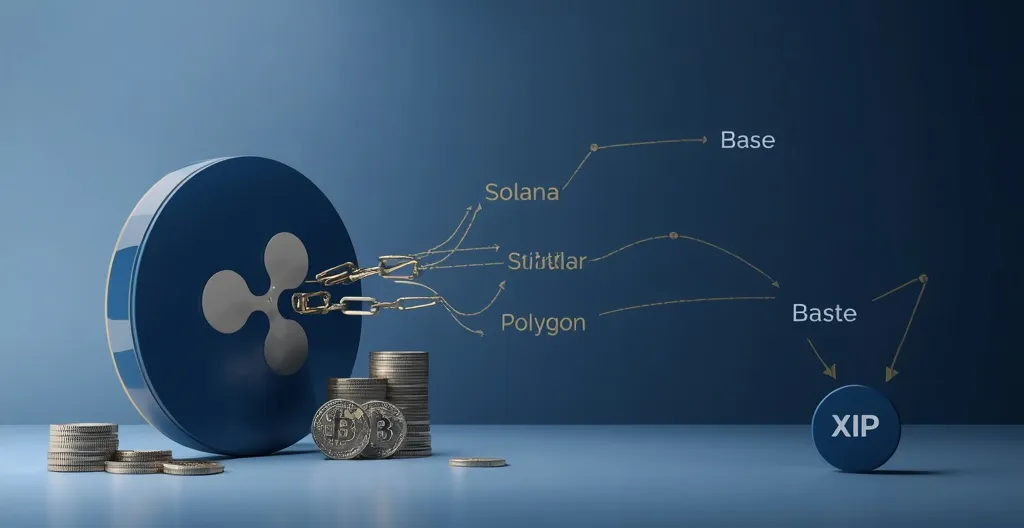
Ripple has joined the Open USD (OUSD) stablecoin consortium, a move that strengthens its institutional profile, but not XRP’s direct utility. OUSD is not launching on the XRP Ledger at inception, so this is not the instant “XRP wins” headline some traders will try to sell you.
- Ripple joined Open USD as an integration partner
- Visa, Mastercard, and BlackRock are tied to the consortium
- OUSD does not launch on XRPL at inception
- RLUSD and OUSD are separate and serve different roles
According to reporting from crypto.news and 247wallst.com, Ripple became part of the Open USD consortium, which is backed by a long list of major finance and payments names. That gives the move real weight. These are not random pump-room nobodies. These are firms with real distribution, compliance influence, and access to the plumbing that moves money.
But the key detail comes early and matters a lot: OUSD does not launch directly on the XRP Ledger. That means there is no clean, mechanical line from this development to a sudden surge in XRP demand. Ripple the company can gain relevance, partnerships, and optionality. XRP the token does not automatically get a usage boom just because Ripple showed up at the table.
That distinction gets blurred constantly in crypto, usually right before someone starts swinging around a price target with the confidence of a man selling tickets to his own imagination.
For readers less deep in the weeds, a stablecoin is a crypto asset designed to keep a steady value, usually by tracking the U.S. dollar. People use them for trading, payments, settlement, and moving value without the wild volatility that makes many tokens behave like a drunk roller coaster.
OUSD appears to be a multichain stablecoin initiative associated with Open Standard. The reporting says it launches on Solana, Stellar, Base, and Polygon, not on XRPL. That matters because if a token or stablecoin does not actually settle on a given chain, then claims about that chain’s direct benefit are much weaker.
Ripple already has its own stablecoin, RLUSD, and that is a separate product. Ripple’s own announcement said RLUSD would launch on the XRP Ledger and Ethereum, backed by U.S. dollar deposits, short-term U.S. government treasuries, and other cash equivalents, with monthly attestations, meaning regular checks showing the reserves are actually there.
So the clean read is this:
Ripple is expanding its institutional reach through OUSD, while RLUSD remains Ripple’s own stablecoin play. Those are related in the sense that they both sit in the payments and settlement universe, but they are not interchangeable. OUSD is not Ripple’s coin, and it is not an XRP Ledger product at launch.
The consortium itself is the bigger story for the stablecoin market. Reporting cited in the research says the group includes more than 140 companies, and names like Visa, Mastercard, and BlackRock immediately raise the stakes. A coalition that large can create meaningful network effects if it actually ships something people use. It can also turn into a bureaucratic mess with a fancy logo.
That is the part traders usually skip. Big consortiums sound elegant on a slide deck, but they can get tangled in governance, regulatory review, and plain old execution risk. The bigger the names, the more careful everyone becomes. The more careful everyone becomes, the slower things often move. Welcome to adult supervision.
There is also a serious commercial angle here. Stablecoins generate value in ways that most token speculators ignore. Their reserve assets can earn interest, and in a high-rate environment that can be a very profitable business. That is a big reason Tether and Circle have become so powerful. They sit in the middle of huge flows and collect the economics.
Open USD may be trying to challenge that model, at least according to the reporting. The appeal of a consortium structure is that reserve economics can be shared among participants instead of being captured by one issuer alone. If that model scales, it could be a real threat to the current stablecoin oligopoly. If it doesn’t, it becomes another ambitious crypto initiative that looked better in the pitch than in production.
For Ripple, the strategic upside is straightforward. Joining OUSD keeps it close to the center of institutional stablecoin infrastructure while RLUSD develops as its own product. That is smart positioning. It keeps Ripple relevant in the payments layer whether or not XRP becomes the main beneficiary.
And that is the part XRP holders need to sit with, whether they like it or not: Ripple can win business without XRP automatically winning demand. Corporate relevance and token utility are not the same thing. A company can land an important partnership, build credibility, and expand its network while the token tied to its broader ecosystem sees little direct effect.
Could XRP still benefit indirectly? Sure. If Ripple’s institutional footprint expands, that can create more corridor activity, more potential payment integrations, and more future opportunities for bridge-style settlement flows. But that is an indirect path, not a guaranteed one. At launch, the direct link between OUSD and XRP is weak.
That is the most honest reading, and it is the one worth keeping. Not every Ripple headline is a hidden XRP catalyst. Sometimes it is just Ripple getting more deeply embedded in the financial system while the token remains one step removed.
There is a broader market lesson here too. Stablecoins are becoming the unglamorous backbone of crypto finance, settlement, trading, transfers, treasury management, all the stuff that matters once the memes stop paying the bills. Bitcoin remains the cleanest monetary asset in the space, but stablecoins are the grease that keeps daily crypto commerce moving.
For the Bitcoin crowd, that’s not a contradiction. It’s a reminder that sound money and payment rails solve different problems. For XRP supporters, the message is simpler: don’t confuse Ripple’s corporate progress with automatic token demand. That shortcut has burned plenty of people already.
There is also a devil’s-advocate angle worth keeping in view. Large stablecoin consortiums can attract regulatory scrutiny, antitrust questions, and ugly coordination headaches. Just because a project has famous names attached does not mean it will sail smoothly into market dominance. Ask Facebook’s Libra how that worked out.
So yes, this is a meaningful institutional development. No, it is not a clean XRP moonshot. And no amount of posturing changes the basic fact that OUSD does not run on the XRP Ledger at launch.
Key questions and takeaways
-
Did Ripple join Open USD?
Yes. Reporting from crypto.news and 247wallst.com says Ripple joined the Open USD consortium as an integration partner. -
Does OUSD launch on the XRP Ledger?
No. The reported launch chains are Solana, Stellar, Base, and Polygon, which weakens any simple XRP-linked thesis. -
Is OUSD Ripple’s own stablecoin?
No. Ripple’s own stablecoin is RLUSD, which Ripple said would launch on the XRP Ledger and Ethereum. -
Why do Visa, Mastercard, and BlackRock matter?
Their involvement signals institutional seriousness. These are firms with real reach, real infrastructure, and real influence over how money moves. -
What is the biggest risk for OUSD?
Execution and regulation. Large consortiums can be slow, messy, and heavily scrutinized, especially when they challenge an existing stablecoin money machine. -
What does this mean for XRP holders?
It is a positive sign for Ripple, but not a guaranteed token catalyst. XRP only gets a direct lift if future usage actually routes meaningful value through the XRP Ledger. -
What is the bigger market story here?
Stablecoin infrastructure and reserve economics. The fight is not just about minting a dollar token, it is about who controls the rails and who gets paid.
Further reading
A few related angles worth keeping on the radar:
- Ripple Joins Open USD Stablecoin Consortium Backed by Visa
- Ripple joins Open USD: what it means for RLUSD and XRP
- Ripple Joins Open USD, a Stablecoin Backed by Visa
- Ripple Joins Open USD, a Stablecoin Backed by Visa,
- Ripple’s RLUSD Stablecoin Hits $120M Milestone, Expands on
- Ripple Launches XRPL AI Starter Kit for Autonomous Machine